


In a country where hockey is often described as part of the national identity, many South Asian families still grew up feeling like spectators to the sport rather than participants in it. For Lali Toor, that disconnect became deeply personal long before it became a mission.
Growing up in Edmonton, the 34-year-old often found himself as the only South Asian player on the ice. There were few role models who looked like him, little representation in hockey culture, and almost no visible pathway for young Indo-Canadian athletes navigating the sport. Instead of accepting that reality, Toor decided to reshape it. Today, as the founder of Apna Hockey, he has become one of the leading voices driving diversity and inclusion in Canadian hockey.
What started as a grassroots initiative has evolved into a movement redefining who belongs in the game.
Founded in 2017 alongside former professional player Dampy Brar, Apna Hockey was created to connect, mentor, and amplify South Asian hockey talent across Canada. The name itself carries emotional weight, “Apna,” meaning “our” in Punjabi, Hindi, and Urdu, reflects the organization’s larger vision of belonging. It is not just about producing elite athletes; it is about ensuring young South Asian players feel seen in arenas where they were once invisible.
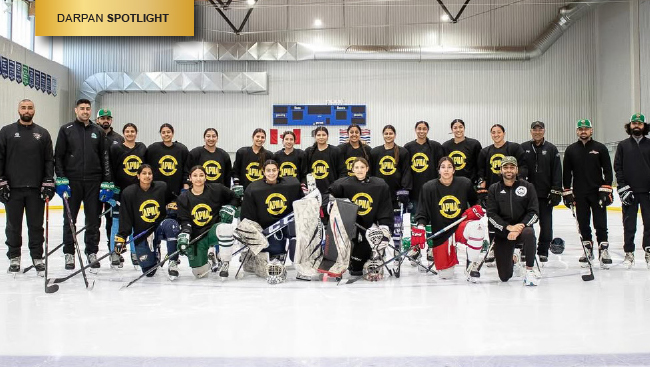
For Toor, representation was never symbolic. It was practical. He understood that when children see athletes, coaches, broadcasters, and community leaders who share their cultural background, the sport suddenly feels accessible. That philosophy has shaped every aspect of Apna Hockey, from mentorship programs and hockey camps to partnerships with NHL organizations and community outreach initiatives.
Over the years, the organization has collaborated with the Edmonton Oilers and the Calgary Flames on South Asian celebration nights and beginner hockey initiatives designed specifically for newcomer families. Through programs like First Shift, Toor has helped introduce families to hockey in a way that removes intimidation around cost, equipment, and access.
The impact has extended far beyond the rink.
Apna Hockey has become a cultural bridge, bringing together sport and identity in a way that resonates deeply with younger generations of Canadians. The organization has highlighted dozens of South Asian players competing at elite levels across leagues, including the NHL pipeline, NCAA, WHL, and U SPORTS. In doing so, it has created visibility where there once was silence.
Toor’s work has also challenged long-held stereotypes around hockey itself. For decades, hockey culture in Canada often appeared distant from immigrant communities, particularly South Asians who traditionally leaned toward sports like cricket or field hockey. But Toor recognized that passion for hockey already existed in these communities—it simply lacked infrastructure, encouragement, and visibility.
Whether through community tournaments, youth camps, Punjabi-language hockey content, or partnerships with national organizations, Toor has consistently emphasized that diversity should not be treated as a side conversation in hockey. It should be embedded within the future of the sport itself.
That commitment earned national recognition when Apna Hockey’s Dampy Brar became associated with the prestigious Willie O’Ree Community Hero Award, honoring efforts to grow the game through inclusion and accessibility. The recognition further validated what many South Asian hockey families already knew: that Toor and his team were creating meaningful change at the grassroots level.
But perhaps the most powerful part of Toor’s story is that he continues to think beyond the present moment. His vision stretches toward building sustainable hockey ecosystems for South Asian athletes, not just in Canada but globally. In recent years, he has also been involved in initiatives connected to international South Asian hockey representation, including showcases featuring teams connected to India and Pakistan.
Even now, Toor often speaks less about personal success and more about collective progress. The goal is larger than one organization or one generation of players. It is about ensuring that future South Asian children entering a hockey rink no longer feel like outsiders. It is about democratizing opportunities, increasing visibility, and creating space for communities historically underrepresented in the sport. Also, with a strong focus on expanding avenues for girls, Toor is not only simply introducing more diversity into hockey but is helping reshape the cultural imagination of the game itself.
Through Apna Hockey, he has built more than a network; he has created a sense of ownership and belonging for a community increasingly carving out its place in Canada’s most iconic game. And for countless young players stepping onto the ice today, that change already feels intimate.


