Sunday, May 24, 2026
ADVT 
Health

Indian American Team Makes Gene-Editing Tool Simpler

IANS, 16 Jul, 2015 01:03 PM
    A team of Indian American researchers has developed a user-friendly resource to make the powerful gene-editing tool more friendly.
     
    The breakthrough has the potential to facilitate new discoveries in gene therapies and basic genetics research.
     
    The gene-editing technique called CRISPR/Cas9 has been widely adopted to make precise, targeted changes in DNA.
     
    The team describes an approach to simplify a labourious part of the gene editing process using the CRISPR/Cas9 system by choosing the best components to match specific gene targets.
     
    "We have taken a step towards making the CRISPR/Cas9 system more robust," said Prashant Mali, assistant professor (UC) Jacobs School of Engineering.
     
    CRISPR/Cas9 is a relatively new genome engineering tool that can target a particular segment of DNA in living cells -- such as a gene mutation -- and replace it with a genetic sequence.
     
    It has two components - a short "guide RNA" with a sequence matching a particular gene target, and a large protein called Cas9 that cuts DNA precisely at that target.
     
    "We built a computational model that accounts for all these different features. The end product is an interactive software for users to find guide RNAs that are predicted to be highly specific and highly active for their gene targets," said Raj Chari, research fellow from the department of genetics at the Harvard Medical School.
     
    This technology ultimately has applications in gene therapies for genetic disorders such as sickle cell anaemia and cystic fibrosis, said the paper published in the journal Nature Methods.
     
    "We hope to minimise the time and work in finding the most successful guide RNA sequence for a gene target, which will be helpful in finding new gene therapies," Chari said.
     
    The team believe this will be a useful resource for the community towards designing improved genome engineering experiments.


    MORE Health ARTICLES

    Build super muscles with soy-dairy protein

    Build super muscles with soy-dairy protein
    Not happy with gym results on your muscles? Try a blend of soy and dairy proteins after resistance exercises as this has now been touted as the best way to build muscle mass.

    Build super muscles with soy-dairy protein

    'Love hormone' bonds animals like humans

    'Love hormone' bonds animals like humans
    And you thought you had a patent on 'love hormone' when it comes to showing affection! Dogs too have oxytocin and release it in a good quantity when in love or looking for bonding.

    'Love hormone' bonds animals like humans

    Can you believe it? Metabolism existed even before origin of life, reveales study

    Can you believe it? Metabolism existed even before origin of life, reveales study
    The mystery behind how the first organisms on earth could have become metabolically active has been unlocked.

    Can you believe it? Metabolism existed even before origin of life, reveales study

    Fly's genome study offers hope for sleeping sickness

    Fly's genome study offers hope for sleeping sickness
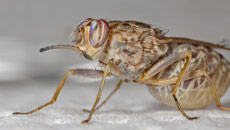
    With genome decoding of tsetse fly that causes the potentially fatal sleeping sickness disease, scientists have discovered new clues to the diet, vision and reproductive strategies of the insect.

    Fly's genome study offers hope for sleeping sickness

    Technology to catch dozing drivers on the go

    Technology to catch dozing drivers on the go
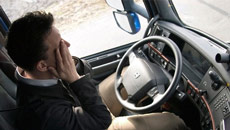
    Long rides at night can now become a lot more pleasant and safe if you listen to researchers who have developed an inexpensive and easier way to find out when the person behind the wheel is about to nod off.

    Technology to catch dozing drivers on the go

    Astronauts may face attention deficit risks

    Astronauts may face attention deficit risks
    Astronauts who are radiation-sensitive need to take extra care to protect their brains as they may face risks of attention deficit and slower reaction times, a study suggests.

    Astronauts may face attention deficit risks