US doctors, including an Indian American doctor reported the first case of a human patient whose severely damaged oesophagus was reconstructed using commercially available stents and skin tissues.
After the 24-year-old man was paralysed in a car crash seven years ago, doctors struggled to repair his disrupted oesophagus.
Despite several surgeries, the defect in the oesophagus was too large to repair and it was resulting in life-threatening infection, the physicians noted in the paper published in the journal in The Lancet.
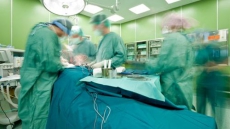
The team of doctors decided to try a technique previously tested only in animals, to reconstruct the upper oesophagus with stents and skin tissue approved by the US Food and Drug Administration.
"This is a first in human operation and one that we undertook as a life-saving measure once we had exhausted all other options available to us and the patient,” Kulwinder Dua, professor at Medical College of Wisconsin in the US.
The doctors used metal stents as a non-biological scaffold and a regenerative tissue matrix from donated human skin to rebuild a full-thickness five cm defect in the oesophagus of the patient.
They inserted an endoscope containing a wire through the man's stomach and up through what remained of his oesophagus, leading to his mouth.
Guided by the wire, they then inserted three stents to recreate the structure of the oesophagus and covered it with skin tissue.
The tissue was then sprayed with a gel made from the patient's own blood, which contained natural substances to attract stem cells.

Although the doctors wanted to remove the stents about three months after the surgery, the patient refused, fearing he would not be able to eat and drink; he was also worried about possible scarring.
Nearly four years later, doctors removed the stents after the man had trouble swallowing when a problem arose with the lower stent.
One year after that, doctors examined the man's oesophagus and found that all five layers of the oesophagus had regrown, closely resembling a normal one.
The patient now does not need a feeding tube and also has not reported any other complications.
Swallowing tests showed full recovery and functioning was also established with oesophageal muscles able to propel water and liquid along the oesophagus into the stomach in both upright and 45 degrees sitting positions.
"The approach we used is novel because we used commercially available products which are already approved for use in the human body and hence didn't require complex tissue engineering," Dua explained.
The research including animal studies and clinical trials, are now needed to investigate whether the technique can be reproduced and used in other similar cases.
“The use of this procedure in routine clinical care is still a long way off as it requires rigorous assessment in large animal studies and phase one and two clinical trials," Dua stated.
The oesophagus is a hollow muscular tube that connects the mouth to the stomach carrying food and liquids.