Sunday, May 24, 2026
ADVT 
Interesting

Students Who Avoid Making Eye Contact Could Be Guilty Of Racism, Oxford University Says

IANS, 24 Apr, 2017 04:52 PM
    Oxford University students who avoid making eye contact with their peers could be guilty of racism. The university’s Equality and Diversity Unit has advised undergraduate students that “not speaking directly to people” could be deemed a “racial micro-aggression” which could lead to “mental ill-health”, The Telegraph reported.
     
    Issued at the start of the Trinity term, the third term at the university, the newsletter claims that asking someone where they are “originally” from implies they are foreigners. It also claims that “jokes drawing attention to someone’s differences” and “not speaking directly to people” are potential forms of “everyday racism”.
     
     
    The newsletter says “some people who do these things may be entirely well-meaning, and would be mortified to realise that they had caused offence. But this is of little consequence if a possible effect of their words or actions is to suggest to people that they may fulfil a negative stereotype.”
     
    However, critics argue this will make the students over-sensitive. Dr Joanna Williams, a lecturer in higher education at the University of Kent, said the guidance was “completely ridiculous” and would make students “hyper-sensitive” about how they interact with one another.
     
    “Essentially people are being accused of a thought crime. They are being accused of incorrect thoughts based on an assumption of where they may or may not be looking.” 
     
    Williams, the author of “Academic Freedom in an Age of Conformity,” said the guidance was “overstepping the mark” by telling students “how they should feel and think”.
     
    Tom Slater, co-coordinator of The Free Speech University Ranking project, that highlights censorship on university campuses, claimed it was all part of a chilling desire on the part of university authorities to police not just opinions, but “everyday conversations between students,” he told The Times. 

    MORE Interesting ARTICLES

    Bikini Round Now Removed From Miss World Pageant

    Bikini Round Now Removed From Miss World Pageant
    The Miss World contest, which has been an annual feature since 1951, will no longer feature a swimsuit round in their competition, the organisation's chairwoman Julia Morley has said.

    Bikini Round Now Removed From Miss World Pageant

    Calorie Labels For Alcoholic Drinks Will Be On The Menu - But Not At The Bar

    Calorie Labels For Alcoholic Drinks Will Be On The Menu - But Not At The Bar
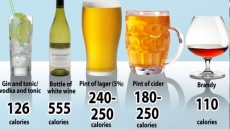
    WASHINGTON — Don't want to be confronted with the number of calories in that margarita or craft beer? Then avoid the menu and order at the bar.

    Calorie Labels For Alcoholic Drinks Will Be On The Menu - But Not At The Bar

    Microbial 'signatures' can nab sexual offenders

    Microbial 'signatures' can nab sexual offenders
    Bacterial communities living on an individual's pubic hairs could be used as a microbial "signature" to trace his involvement in sexual assault cases, say Australian researchers....

    Microbial 'signatures' can nab sexual offenders

    Know how cows communicate with their calves

    Know how cows communicate with their calves
    Cows use individualised calls to communicate with each other, a study that identified particular types of mother-offspring contact calls in cattle has showed....

    Know how cows communicate with their calves

    The Cult Of Culture: Merriam-webster Names 'Culture' Its 2014 Word Of The Year

    The Cult Of Culture: Merriam-webster Names 'Culture' Its 2014 Word Of The Year
    NEW YORK — A nation, a workplace, an ethnicity, a passion, an outsized personality. The people who comprise these things, who fawn or rail against them, are behind Merriam-Webster's 2014 word of the year: culture.

    The Cult Of Culture: Merriam-webster Names 'Culture' Its 2014 Word Of The Year

    Unhealthy environment tunes kids' genes for anti-social behaviour

    Unhealthy environment tunes kids' genes for anti-social behaviour
    Exposure to family conflict or sexual abuse could affect expression of certain genes and make your kids prone to delinquent behaviour, a new research has found...

    Unhealthy environment tunes kids' genes for anti-social behaviour