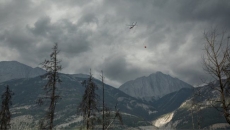
Canadian forests are increasingly primed for severe, uncontrollable wildfires, a study published Thursday said, underlining what the authors described as a pressing need to proactively mitigate the "increased threat posed by climate change."
The study by Canadian researchers, published in the peer-reviewed journal Science, looked at Canadian fire severity from 1981 to 2020.
"The widespread increases, along with limited decreases, in high-burn severity days during 1981 to 2020 indicate the increasingly severe fire situation and more challenging fire season under the changing climate in Canada," the study read.
Co-author Xianli Wang, a research scientist with the Canadian Forest Service, says there were on average an additional two days conducive to high-severity fires in 2000 to 2020, compared to the previous two decades. In some areas, it was closer to five days.
While that may not sound like much, last summer's devastating wildfire in Jasper, Alta., grew to about 60 square kilometres in a matter of hours.
"This is just a more dramatic fire situation that we are currently having than before," he said.
When it comes to the geographic distribution of severe wildfire, Wang said the findings suggest Canada's record-breaking 2023 season was not an aberration, but a "glimpse into the future."
"You will see this kind of high-severity burning across the board," said Wang.
The study suggests the major environmental driver of fire severity was dry fuel, such as twigs and leaves, while the effect of weather – such as hot, dry and windy conditions – was more pronounced in northern regions.
The results, the study said, demonstrated "the critical role that drought plays" in a fire's severity.
As climate change lengthens the fire season, the study says spring and autumn have added more high-severity burn days in recent decades. Those increases coincided with areas that also had the most severe summer months.
"A lot of the time, you think only summer fires are more severe – they burn higher flames, they destroy everything – but in the spring it's not that bad. That is not the case anymore," Wang said.
The greatest increase in burn severity days was recorded in an area covering northern Quebec and an area covering Northwest Territories, northwest Alberta and northeast British Columbia.
Both of those regions are home to extensive coniferous trees. Areas with more low-burn severity days were mainly in southern broadleaf and mixed-wood forests, the study said.
Severity is a measure of how much damage a fire wreaks on the forest's vegetation and soil. While fire is a natural part of the ecosystem, Wang said severe fires can in some cases burn so hot and deep into the ground that they wipe out seeds stored in the soil, affecting the forest's recovery.
The findings, the study suggested, could help decision makers choose the best times and locations for prescribed burns – planned and controlled fires intended to support natural regeneration – while also reducing fire hazards to nearby communities.