
Saturday, May 23, 2026
ADVT 
National

Economic growth in July could give way to stall in August: StatCan

Darpan News Desk The Canadian Press, 26 Sep, 2025 08:21 AM
  • Economic growth in July could give way to stall in August: StatCan

The Canadian economy grew in July but any momentum may have been short lived, Statistics Canada said Friday.

Real gross domestic product grew 0.2 per cent in July, marking the first signs of growth in four months. Real GDP declined 1.6 per cent on an annualized basis in the second quarter.

The growth in July was a bit faster than economists' expectations heading into the release.

Statistics Canada said the growth in July was driven by goods-producing industries, which grew 0.6 per cent for the month.

TD Bank economist Marc Ercolao said in a note to clients Friday that gains in July were concentrated in sectors hit hard by U.S. tariffs, suggesting those industries are starting to stabilize after the trade shock.

The mining, quarrying, and oil and gas extraction sector added 1.4 per cent in July as mining and quarrying, except oil and gas, rose 2.6 per cent. The oil and gas extraction subsector grew 0.9 per cent in July.

The manufacturing sector grew 0.7 per cent as durable goods manufacturing grew 1.0 per cent. Non-durable goods manufacturing rose 0.4 per cent.

However, Statistics Canada noted in a special bulletin on the steel sector that U.S. President Donald Trump's move to double tariff levels on the industry in June hit metals manufacturers hard in July.

Activity in iron and steel mills and ferro-alloy manufacturing group was down 19 per cent in July, the agency said.

Meanwhile, services-producing industries edged up 0.1 per cent as the transportation and warehousing sector rose 0.6 per cent. The retail trade sector fell 1.0 per cent.

Statistics Canada's early estimates suggest the economy showed no growth in August.

Gains in wholesale and retail trade last month were offset by declines in mining and quarrying, oil and gas extraction, manufacturing and transportation and warehousing, the agency said.

"The Canadian economy took a slightly bigger-than-expected step forward in July, only to stumble again in August," said CIBC senior economist Andrew Grantham in a note to clients.

The Bank of Canada cut its benchmark interest rate by a quarter point to 2.5 per cent last week as policymakers said the balance of risks was shifting toward a weakening economy and away from rising inflation.

Even with the stronger July, activity for the third quarter is tracking slightly weaker than projections in the Bank of Canada's most recent outlooks, Grantham said.

He said that sets the central bank up for one more rate cut, perhaps as early as its decision at the end of October, depending on the inflation and labour market data still to come.

Ercolao also said he expects the Bank of Canada will cut again before the end of the year as growth rebounds modestly but slack remains in the economy.

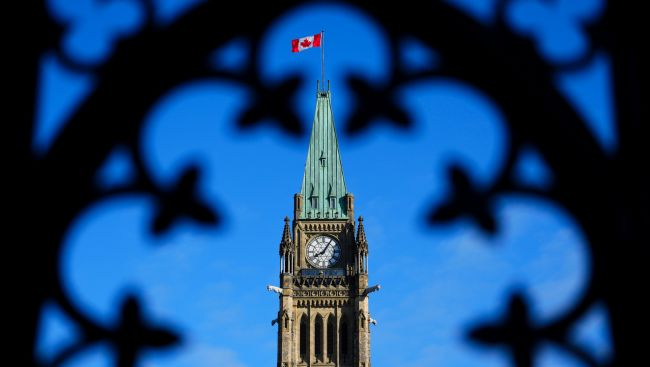
Picture Courtesy: THE CANADIAN PRESS/Sean Kilpatrick

MORE National ARTICLES

Weak loonie signals economy is 'in trouble': currency expert

Weak loonie signals economy is 'in trouble': currency expert
The Bank of Canada's end-of-day exchange rate Monday had the loonie trading at 68.48 cents US, but the Canadian dollar neared 70 cents in the minutes after Prime Minister Justin Trudeau said the planned tariffs would be paused for at least 30 days. The overall trend for the Canadian dollar however has been weak, which has implications for the economy. 

Weak loonie signals economy is 'in trouble': currency expert

Interprovincial trade barriers: what they are, why they exist and how to cut them

Interprovincial trade barriers: what they are, why they exist and how to cut them
The Trump administration's on-again, off-again threat to impose damaging tariffs has boosted an old idea for driving economic growth in Canada: eliminating interprovincial trade barriers. Here's a look at how interprovincial trade barriers work and why years of efforts to tear them down them have largely failed.

Interprovincial trade barriers: what they are, why they exist and how to cut them

Trudeau says U.S. tariffs on Canada will be paused for 30 days

Trudeau says U.S. tariffs on Canada will be paused for 30 days
Prime Minister Justin Trudeau says "proposed tariffs" between Canada and the United States will be paused for at least 30 days while the countries work together on the border.

Trudeau says U.S. tariffs on Canada will be paused for 30 days

Canada's forestry sector faces uncertainty with 25 per cent U.S. tariffs

Canada's forestry sector faces uncertainty with 25 per cent U.S. tariffs
A wide shadow of uncertainty has been cast over Canada's forestry sector by U.S. President Donald Trump's decision to impose a 25-per-cent tariff on its lumber products. Several industry groups have released statements criticizing the tariff as unnecessary and harmful for both sides, a sentiment echoed by British Columbia Premier David Eby who vows full support for the provincial sector.

Canada's forestry sector faces uncertainty with 25 per cent U.S. tariffs

Trump mistaken, U.S. banks can and do operate in Canada says finance professor

Trump mistaken, U.S. banks can and do operate in Canada says finance professor
A finance professor at the University of Toronto says American banks do operate in Canada despite assertions by U.S. President Donald Trump that they are not allowed to do business in the country. The Office of the Superintendent of Financial Institutions lists Amex Bank of Canada, Citibank Canada and J.P. Morgan Bank Canada on Schedule II, all having U.S. parent companies. 

Trump mistaken, U.S. banks can and do operate in Canada says finance professor

B.C. critical minerals being diverted away from United States: David Eby

B.C. critical minerals being diverted away from United States: David Eby
Companies in British Columbia are in the process of redirecting critical minerals and energy products to markets outside the United States, Premier David Eby said, as the reality of U.S. President Donald Trump's tariffs sets in. Eby noted B.C. has opened new trade offices in Taiwan, Vietnam and the Philippines over the last 18 months.

B.C. critical minerals being diverted away from United States: David Eby