
Saturday, May 23, 2026
ADVT 
National

Timeline of B.C.'s three-year drug decriminalization pilot project

Darpan News Desk The Canadian Press, 15 Jan, 2026 09:49 AM
  • Timeline of B.C.'s three-year drug decriminalization pilot project

British Columbia's three-year pilot project that decriminalized the possession of small amounts of illicit drugs for personal use is set to end on Jan. 31. 

Health Minister Josie Osbourne has announced B.C. will not be extending the program. Here are some of the key moments in its history.

May 31, 2022

Health Canada grants the B.C. government's request for an exemption from s. 56 of the federal Controlled Drugs and Substances Act.

Jan. 31, 2023

The three-year exemption is implemented in B.C. The change decriminalizes the personal possession of up to 2.5 grams cumulatively of opioids, crack and powdered cocaine, methamphetamine and MDMA for adults. Possession continues to be prohibited around schools, childcare facilities, airports and during the operation of motor vehicles.

Nov. 8, 2023

The Restricting Public Consumption of Illegal Substances Act receives Royal Assent in the B.C. legislature. The bill prohibits consumption of illegal substances in public spaces and authorizes police to seize them and/or direct people to stop. Three days later, the Harm Reduction Nurses Association asks B.C. Supreme Court to declare Bill 34 unconstitutional. The court later grants a temporary injunction, preventing the bill from going into effect.

Jan. 31, 2024

Mental Health and Addictions Minister Jennifer Whiteside releases a statement marking the one-year anniversary of decriminalization, saying ending the project won't save "a single life."

May 7, 2024

Health Canada grants an amendment that curtails B.C.'s exemption. Decriminalization is restricted to possession in private homes and places where homeless people are legally sheltering, as well as overdose prevention, drug checking and supervised consumption sites and health-care clinics providing outpatient addiction services.

Jan. 6, 2026

When asked about extending B.C.'s exemption that allows for decriminalization, Premier David Eby says the province is "not going back to the old policy of decriminalized public drug use in British Columbia." He says "it didn't work and we ended that."

Jan. 14, 2026

Health Minister Josie Osborne announces the province will not seek an extension of its exemption agreement with Health Canada. Osborne says the goal of the pilot project was to make it easier for people to come forward and seek help, but it "hasn't delivered the results" officials hoped for.

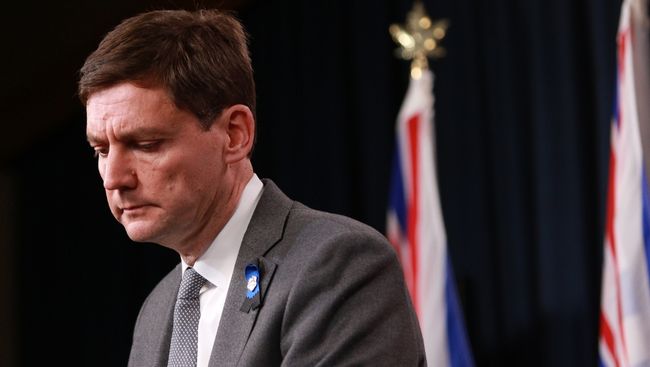
Picture Courtesy: THE CANADIAN PRESS/Chad Hipolito


MORE National ARTICLES

Emergency Preparedness Minister Harjit Sajjan says he won't run in next election

Emergency Preparedness Minister Harjit Sajjan says he won't run in next election
Another member of Prime Minister Justin Trudeau's front bench has decided to step away from federal politics at the next election. Emergency Preparedness Minister Harjit Sajjan says his name will not be on the ballot when the next election is held, though he says he will remain a dedicated member of the Liberal party.

Emergency Preparedness Minister Harjit Sajjan says he won't run in next election

Canadian doctor says WHO headquarters 'stressed, devastated' as Trump orders U.S. exit

Canadian doctor says WHO headquarters 'stressed, devastated' as Trump orders U.S. exit
Staff at the World Health Organization are "devastated" by President Donald Trump's executive order to pull the U.S. out of the agency, a Canadian global health specialist says. Dr. Madhukar Pai, the Canada Research Chair in Epidemiology and Global Health, is at the WHO headquarters in Geneva this week for meetings about tuberculosis and was there at the time Trump signed the order Monday.  

Canadian doctor says WHO headquarters 'stressed, devastated' as Trump orders U.S. exit

Immigration minister says U.S. is still safe for refugees despite Trump's rhetoric

Immigration minister says U.S. is still safe for refugees despite Trump's rhetoric
Refugee advocacy groups are pushing back as the federal immigration minister says Ottawa still regards the U.S. as a safe country for transgender refugees under President Donald Trump. Trump signed executive orders on the first day of his new term to make recognizing gender based on biological characteristics U.S. government policy, and to pause the refugee program.

Immigration minister says U.S. is still safe for refugees despite Trump's rhetoric

Nearly 500 B.C. residents received an organ transplant in 2024

Nearly 500 B.C. residents received an organ transplant in 2024
Health authorities in British Columbia say nearly 500 people in the province received a life-saving organ transplant last year. The Provincial Health Services Authority, BC Transplant and the Ministry of Health say in a joint news release that 481 transplants in 2024 came from more than 200 donors.

Nearly 500 B.C. residents received an organ transplant in 2024

Premiers, prime minister meet to talk Trump tariffs after cabinet retreat

Premiers, prime minister meet to talk Trump tariffs after cabinet retreat
Canada's premiers are meeting virtually with the prime minister today to talk about Donald Trump's early moves as president and the looming threat of tariffs. The first ministers have committed to weekly meetings now that Trump has been installed in the White House.

Premiers, prime minister meet to talk Trump tariffs after cabinet retreat

B.C. Premier David Eby asks Canadians to think carefully about spending money in U.S.

B.C. Premier David Eby asks Canadians to think carefully about spending money in U.S.
Trump's proposed 25 per cent tariffs on Canadian exports would be a "deliberate economic attack" on B.C. families and people should think carefully about spending money in a country that wants to do them economic harm, Eby said during a news conference in Vancouver on Tuesday.

B.C. Premier David Eby asks Canadians to think carefully about spending money in U.S.