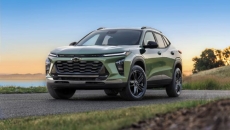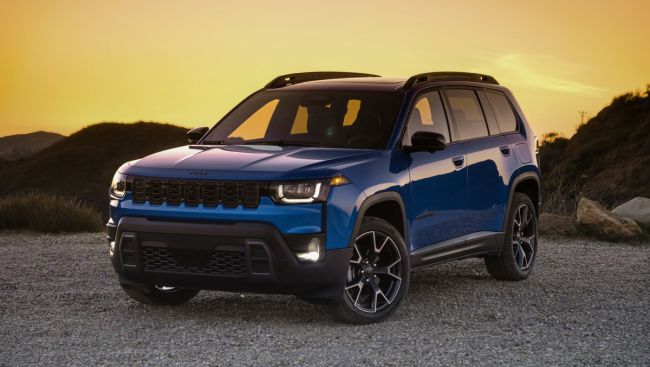
Two new hybrid SUVs have hit the market in the last two years from brands known for their outdoorsy images: the Jeep Cherokee and the Subaru Forester. The Jeep Cherokee has been redesigned for 2026 after a three-year hiatus. Notably, every new Cherokee has a hybrid powertrain that gets more than 30 mpg.
The Subaru Forester, meanwhile, gained its hybrid powertrain option for 2025 and is better for it, improving this SUV’s fuel economy, performance and refinement. Both SUVs could be appealing if you’re interested in a high-mpg SUV that can help you get out into nature on the weekends. Edmunds’ auto experts tested both to find which one is a better fit for your needs.
Fuel economy and performance
The Cherokee gets an EPA-estimated 37 mpg in combined city/highway driving. The Forester Hybrid gets a bit less at 35 mpg combined. This is a nice boost from gas-only SUVs — the regular Forester gets up to 29 mpg, for example. Other rival hybrid SUVs are capable of even better mpg, though those are often front-wheel-drive versions that get slightly better fuel economy. The Cherokee and Forester Hybrid both come standard with all-wheel drive, with no option for front-wheel drive. On the upside, however, you’ll appreciate the extra traction if you do a lot of driving on slippery roads in the wintertime.
Both SUVs have decent power for daily driving. In Edmunds’ testing, the Cherokee accelerated from zero to 60 mph in 8.7 seconds. The Forester Hybrid needed 8.8 seconds. Edmunds’ drivers did notice that the Cherokee’s hybrid powertrain does a better job of keeping noise and vibration out of the cabin, resulting in a quieter driving experience.
Winner: Jeep Cherokee
Comfort and utility
Edmunds’ editors found that the Forester has a smoother ride over bumps and ruts than the Cherokee. It also has more comfortable front seats that are easier to get in and out of. For long road trips, you’ll probably prefer the Forester. The back seats are pretty similar in these SUVs, though. Both are comfortable for adults and have enough space to install child seats easily.
Edmunds found the Subaru Forester’s boxy cargo area ideal for hauling your stuff, whether it be luggage, groceries or outdoor recreational gear. The Cherokee’s cargo area isn’t quite as roomy, but it is still quite useful.
Winner: Subaru Forester
Technology features
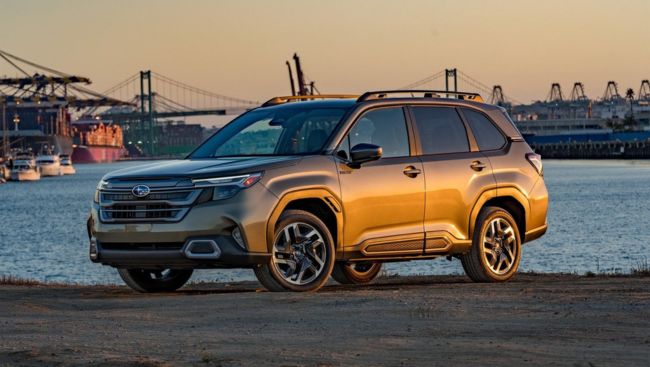
The Subaru Forester Hybrid may have a big portrait-oriented screen, but it’s often frustratingly slow to boot up and respond to your presses on the on-screen buttons. Feature content is good, but again, execution matters. For example, the Forester’s available wireless phone charging pad is made of hard plastic and isn’t grippy enough to keep a phone consistently in place if you take a sudden turn.
A similar situation exists with the Forester’s driver assistance features. The Forester comes with a lot of them, but the way they work isn’t great. For example, the adaptive cruise control can be slow to respond to changes in traffic, and the constant warning beeps to remind you to keep your hands on the steering wheel can get annoying. The Jeep’s driver assist features are more sophisticated and enjoyable to use.
Response time can also be an issue for the Jeep’s 12.3-inch landscape-oriented touchscreen, but the graphics look more modern. We also like that its available wireless phone charger grips onto a phone with tenacity and doesn’t take up much space.
Winner: Jeep Cherokee
On-road and off-road driving
Despite Jeep’s off-roading reputation, the Cherokee has less ground clearance than the Forester, and it lacks the sort of robust all-wheel-drive systems and off-road drive modes found in other Jeep models. A more rugged Cherokee variant, the Trailhawk, will debut for 2027, but for now, the specialized Forester Wilderness trim is the better bet for tackling a dirt road or trail.
Not surprisingly, then, the Cherokee is more at home on pavement. Its handling and steering are merely average, though, and suffers from an overly thick octagonal-like steering wheel that’s awkward to hold. The Subaru is also substantially easier to see out of.
Winner: Subaru Forester
Price and value
The 2026 Jeep Cherokee starts at $36,995, including destination, for its base trim. That’s a bit more than the Forester Hybrid that starts at $36,180 for its starter Premium trim. Broadly, the Forester Hybrid comes with more features for your money as well. For example, the Forester has standard heated front seats and a standard power-adjustable driver’s seat, while on the Cherokee you’ll have to get the next-step-up Laredo to get those features. It’s a similar story at the top of the lineup, where a fully loaded Cherokee will cost you about two grand more than the Forester.
Winner: Forester
Edmunds says
It’s a close call between these two small SUVs. They both get good mpg and can serve you well as a daily driver. Overall, however, Edmunds recommends the Forester Hybrid. Its slight advantages in comfort, utility and value make it the better pick.
Picture Courtesy: Stellantis via AP, Edmunds via AP