In a quiet corner of Vancouver, a young immigrant boy once stood by his backyard fence as his neighbor, uncertain and unfamiliar with his name, decided to call him “Steve.” Satwinder Singh Rai—new to Canada, new to the neighborhood, and just five years old—accepted the name without protest.
He didn’t know it then, but that small moment of adaptation would become a lasting emblem of the balance he would master between two worlds: heritage and home.
Today, that boy is the 32nd Chief Constable of the Vancouver Police Department—the city’s first leader of South Asian descent. At 59, Chief Constable Steve Rai carries the name given to him by circumstance, but the rest—his journey, discipline, empathy, and integrity—he has claimed for himself.
This is not just the story of a police chief. It’s the story of an immigrant, a son, a father, a teammate, and a bridge-builder. A story of humility and honor, of cultural duality lived with grace, and of a man who has carried his roots through every rank and precinct.
From Punjab to Vancouver
Born in rural Punjab, Chief Rai recalls his early childhood with striking clarity, despite having left at the age of five. “I still remember the banyan tree in our village,” he says. “There was this unspoken closeness among people in India. Everyone felt like family.”
His parents emigrated to Canada from Punjab in the early 1970s, joining a small but growing community of South Asian immigrants who arrived with little more than hope and grit. Chief Rai’s father, then just 20, worked backbreaking hours in northern B.C.’s lumber mills to support the family he had left behind. “He had one jacket, and drank Cremo milk for calories,” Chief Rai says, reflecting on the resilience of that generation. “You didn’t complain. You worked.”
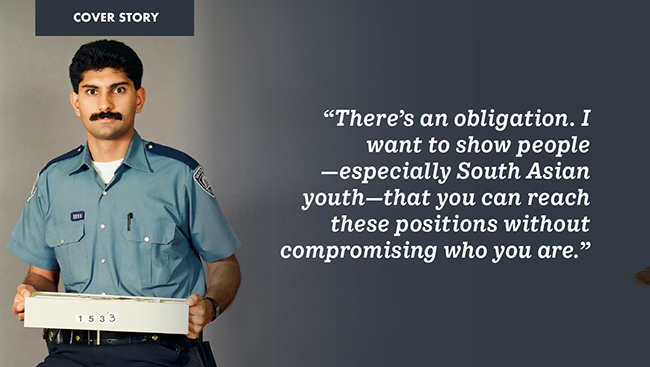
Eventually, his father found work as part of the Vancouver Police Department’s building maintenance team. “He loved that job,” Chief Rai shares. “The officers treated him with respect, like family. That stayed with me and my brother. Even today, some officers might not know me, but remember my dad.”
What also stayed was the impact of early struggles in a new country. As the only Punjabi family on a largely Greek street in Kitsilano, Chief Rai saw the duality of both community and caution. “A neighbor put up these massive fences after we moved in,” he says. “They talked to us, but they were uncomfortable. And yet, over time, those barriers came down.”
A Quiet Commitment
Chief Rai never saw his identity as something to be hidden. He wore it with quiet pride, even while navigating a childhood where no one around him looked like him. “I’ve always felt I could be both—proudly Canadian and deeply rooted in Indian culture.”
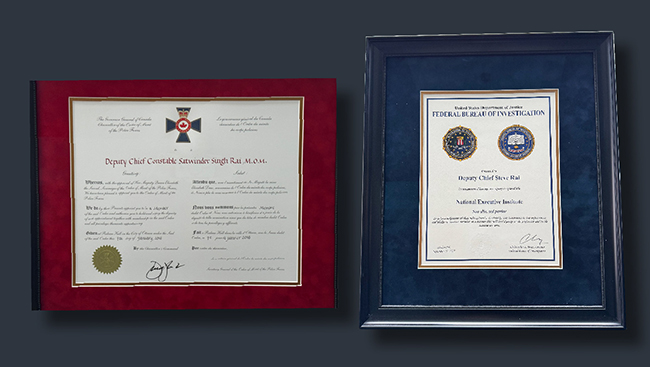
He pursued a degree in Asian Studies at the University of British Columbia, choosing to minor in Sikh history. He continued on to earn a master’s in Criminal Justice from the University of the Fraser Valley, and later attended programs at Harvard, the FBI Academy, and even abroad in Singapore and Australia.
But education was just one part of a larger pursuit—to be excellent at whatever he did. From the very beginning of his career with the VPD, Chief Rai stood out because of how he approached work.
The Street Cop Who Never Said No
Chief Rai began his VPD career in 1990 at 23 years of age, serving as a frontline patrol officer in District 3 for 8 years. He patrolled East Vancouver at a time when gang activity and organized crime were escalating. “Those early years are about building a reputation,” he says. “Not for promotion, but because you want your peers to know you’re someone they can rely on.”
He built his name by saying yes to challenges others might avoid. He worked in jail operations, human resources, and recruiting. He ran the Davie Street Community Police Office, where he helped bridge relationships with Vancouver’s LGBTQ2+ community, leading to the return of uniformed officers in the Pride Parade.
He also spent a decade as a hostage negotiator, a role that demanded not just strategy, but deep emotional intelligence. “You learn how to listen. How to guide someone through a crisis. You’re not just talking people off ledges, you’re listening for what’s missing in their life story.”
In 2011, he served as public order commander during the Stanley Cup riot, an event that brought Vancouver to a standstill. With calm leadership, he helped de-escalate a situation twice as volatile as the infamous 1994 riot in just under four hours. “No one was seriously injured. That was a good day, considering how it started.”
Community as Compass
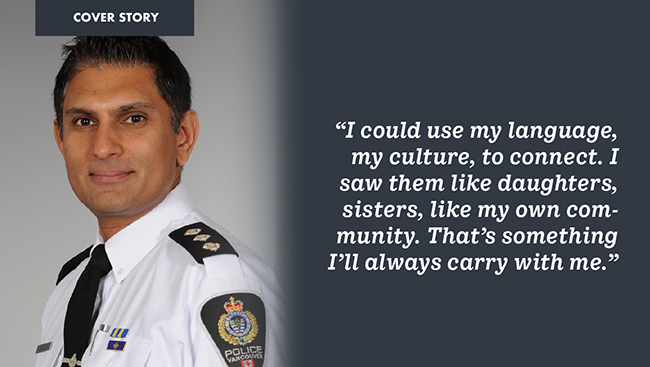
Even as he climbed the ranks, Chief Rai remained grounded in service. He speaks with special pride about helping vulnerable South Asian women—often young, newly arrived, and in difficult domestic situations—who had no family or support system to lean on. “I could use my language, my culture, to connect. I saw them like daughters, sisters, like my own community. That’s something I’ll always carry with me.”
When asked about his leadership style, Chief Rai reflects not just on authority, but empathy. “I’ve hired a majority of the officers walking these halls today. I know their stories. I know what they bring to the table. But I also know that being a leader sometimes means saying no, even to people you care about.”
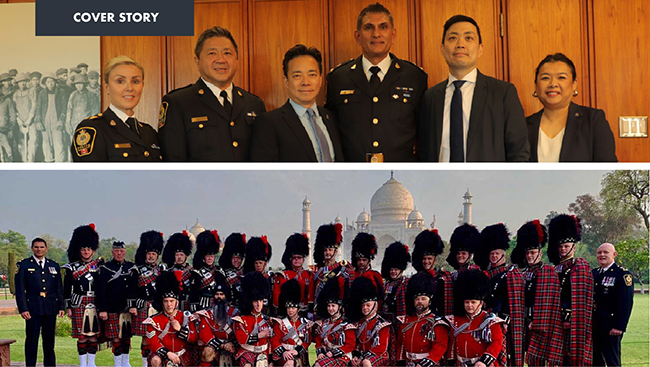
He also understands the expectations that come with being a visible figure in the community. “There’s an obligation. I want to show people—especially South Asian youth—that you can reach these positions without compromising who you are.” His historic appointment hasn’t gone unnoticed either. “Many people from the South Asian community have reached out. I’m deeply grateful for their support—and especially grateful to Mayor Ken Sim and the Vancouver Police Board.”
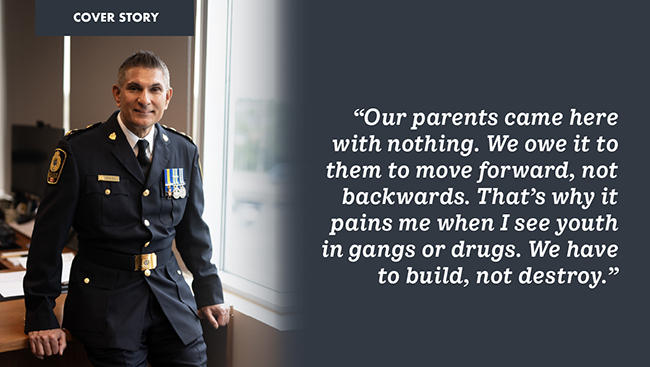
He’s especially passionate about guiding the next generation. “Our parents came here with nothing. We owe it to them to move forward, not backwards. That’s why it pains me when I see youth in gangs or drugs. We have to build, not destroy.”
The Future of Policing
Today, Chief Rai oversees a department of almost 2,500 staff members. He’s at the helm of the largest municipal police department in B.C., second only to the RCMP provincially.
His vision is both pragmatic and progressive. He wants a leaner, sharper force—one that isn’t stretched thin dealing with social issues like mental health and homelessness, which he believes should be addressed by better-funded support systems.
“The model of policing hasn’t really changed since the 1800s,” he says. “We need to evolve. We need to stop doing the jobs of five different sectors and get back to core policing.”
At the same time, he wants the department to continue intelligently diversifying. “Representation matters. It’s important that leadership reflects the community. But success has to come from skill, not skin color. Otherwise, you risk tokenizing people. And that doesn’t help anyone.”
Life Beyond the Badge
Away from the uniform, Chief Rai is a man of quiet joys. He likes to barbecue, water the lawn, and walk his dog. He recently picked up skiing again, inspired by his son’s love for snowboarding. And he still has a soft spot for astronomy, though time rarely permits much stargazing.
“This job is 24/7,” he admits. “Calls don’t stop when I leave the office. They come in while I’m walking the dog, or driving, or even getting ready for bed. But that’s the commitment it takes.”
He credits his family for their unwavering support—his daughter, a pediatric nurse, and his son, a university student, are both living their own journeys of purpose. “It’s a good time to be doing this job,” he says. “They’re grown, and they understand the demands.”
A Chapter for All of Us
Chief Steve Rai’s story isn’t just about law enforcement. It’s about honoring where you come from while committing to where you are. It’s about embracing identity, navigating complexity, and still choosing to lead with humility.
For the countless South Asian immigrants flipping through these pages, his story will resonate. It is, in many ways, our story—a reflection of the hope our parents carried in their suitcases, the bridges we’ve tried to build in every profession, and the quiet belief that with hard work and integrity, you can shape an entirely new path.
He may not have chosen the name “Steve.” But everything else—he’s earned, on his own terms.