
When Dr. Baldev Sanghera was elected President-Elect of Doctors of BC, it marked a historic first: he became the first turban-wearing leader of any regional or national medical association in a Western country.
For Dr. Sanghera, the milestone is less about personal recognition and more about what it represents: visibility, inclusion, and the possibility of leadership that fully reflects the communities it serves. Though his term begins this year, his path to provincial medical leadership is grounded not in titles, but in decades of community-based care, deep listening, and a belief that healthcare is, at its core, a human relationship.
Dr. Sanghera’s journey into family medicine began with a commitment to continuity and connection. Since opening his Burnaby practice in 1998, he has cared for patients across generations, witnessing lives unfold over time. “Family medicine has a unique ability to build long-term relationships,” he reflects. “It’s a field where trust is earned over time, where care is not episodic but enduring.” For him, the clinic has always been more than a workplace; it is a community anchor. “Every day, I’m reminded that healing begins not just with treatment, but with trust.”
Serving in one of the most culturally diverse regions in the province has profoundly shaped his approach to both care and advocacy. In Burnaby, patients arrive with different languages, histories, and expectations of the healthcare system. Dr. Sanghera sees each encounter as an opportunity to understand context, not just symptoms. “Every patient encounter is an opportunity to listen deeply, understand the unique context a patient brings, and deliver care with dignity,” he says. This perspective has reinforced his belief that equity cannot be an afterthought in healthcare design. Rather, it must be embedded from the start.
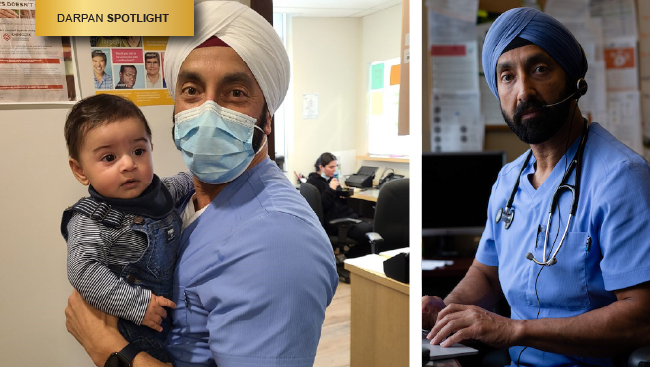
As a longtime leader within Doctors of BC and the Family Practice Services Committee, Dr. Sanghera is acutely aware of the pressures facing frontline physicians. Burnout, administrative overload, and retention challenges are no longer abstract concerns, but lived realities. “Supporting frontline physicians begins with recognizing the extraordinary demands they carry every day,” he notes. He emphasizes that physician voices must be central to policy-making, not consulted after decisions are made. “When physicians are supported,” he adds, “the entire healthcare system becomes stronger, more resilient, and more compassionate.”
One of his most consistent advocacy points has been reducing administrative burden so doctors can spend more time with patients. He describes the current reality as one where paperwork too often competes with care. From simplifying electronic medical records to integrating healthcare systems and empowering team-based models, Dr. Sanghera believes meaningful change comes from designing systems with physicians at the table.
As he prepares to step into his role as President-Elect, Dr. Sanghera is clear about the values that will guide his leadership. Community trust, physician wellness, equity, and collaboration sit at the center of his vision. He highlights, “I believe progress comes through transparency and partnership, with physicians’ voices at the heart of reform.” Amid ongoing transformation in BC’s healthcare system, he remains hopeful, encouraged by interdisciplinary care models, renewed focus on access and continuity, and a growing culture of listening across government and healthcare institutions.
Be it as a physician, advocate, or leader, Dr. Baldev Sanghera continues to model a form of leadership rooted in service, humility, and the belief that inclusive care begins with understanding the people it exists to serve.