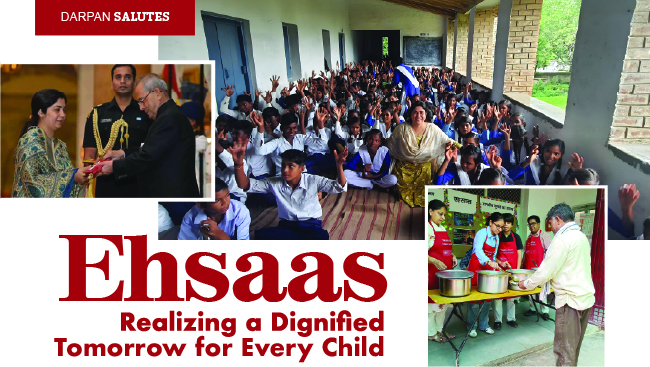
She was just two years old—tiny, petrified, and weeping alone on a crowded train. No one stopped to help, except for Lavkush, a young boy himself, who gently lifted her into his arms and brought her to Ehsaas, refusing to hand her over until he was sure she would be safe.
The little girl, Kajal, was given medical care, counseling, and love. Days later, she was reunited with her mother in Kanpur. What could have ended in tragedy became a story of protection and hope—because ‘Ehsaas’ was there.
The word Ehsaas means ‘realization’. In 2002, when Shachi Singh and a group of like-minded individuals founded the organization, they recognized a painful truth: children like Kajal live in danger every day, their rights violated, their voices unheard. They also felt that there was a dire need to build systems that are child-friendly, protective, and dignified.
What began as an act of conscience has since grown into a lifeline for thousands of children in Uttar Pradesh. Ehsaas doesn’t just rescue and shelter children; it gives them back what they have been denied—family, education, skills, and above all, hope.
From the Streets to Safe Havens
Ehsaas began its journey by intervening where children were most vulnerable: on the streets and at railway stations. These were places where poverty, neglect, and exploitation thrived. To break that cycle, the organization created India’s first Child Friendly Railway Station model, a systemic intervention that identifies, rescues, and rehabilitates children. Every year, 250 to 300 children are reunited with their families through this mechanism, recognized by the Ministry of Women and Child Development as a best practice model.
At the heart of Ehsaas’s work is its shelter program. The permanent home called ‘Gharonda’ gave children not only safety but also belonging. One of its most inspirational stories is of Suraj, an orphan rescued from a railway station, who grew up at Gharonda. Suraj went on to become a successful advertisement editor at India TV, and years later, when he shared his journey before the National Commission for Protection of Child Rights, his words moved the audience to tears.
A Holistic Approach
What makes Ehsaas unique is its commitment to work at multiple levels—child, family, community, and policy. The organization believes in providing intensive support for a few, rather than shallow support for many.
For children, this means more than rescue. It means counseling, education, vocational training, and full rehabilitation. For families, it means skill development programs that ensure parents can support their children. For systems, it means training and sensitization of stakeholders—police, railway staff, government officials—so that child protection is not the job of one NGO but the responsibility of all.
Ehsaas has trained nearly 10,000 stakeholders so far and continues to advocate for systemic change. Its capacity-building efforts are matched by its research initiatives, producing knowledge that informs policies for child protection.
Stories of Change
Every milestone Ehsaas has achieved is best understood through the stories of children it has touched.
Ajay came to Ehsaas when he was a seven-year-old boy. Over 13 years, he grew into a confident young man, completing his schooling, pursuing a Bachelor of Commerce, and tutoring younger students. Today, he is an inspiration to children who once stood where he did—at the crossroads of neglect and opportunity.
And then there is Madhu, a bright eleven-year-old girl who lost her parents and was forced into domestic labor by her sister and brother-in-law. After severe abuse, she was rescued and brought to Ehsaas. Today, she studies and lives in safety, determined to build a better future. Her story is a reminder that behind statistics lie lives waiting to be reclaimed.
Beyond Child Protection: Fighting Hunger
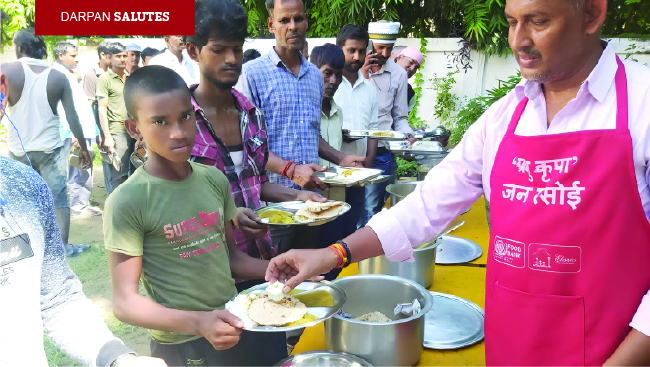
Ehsaas’s work has expanded beyond child rescue and rehabilitation to address one of the root causes of vulnerability—hunger. The Uttar Pradesh Food Bank, based in Lucknow, ensures that no family is forced to send its children onto the streets in search of food. The food bank not only distributes rations but also links families to healthcare, education, and government programs.
Recognition and Impact
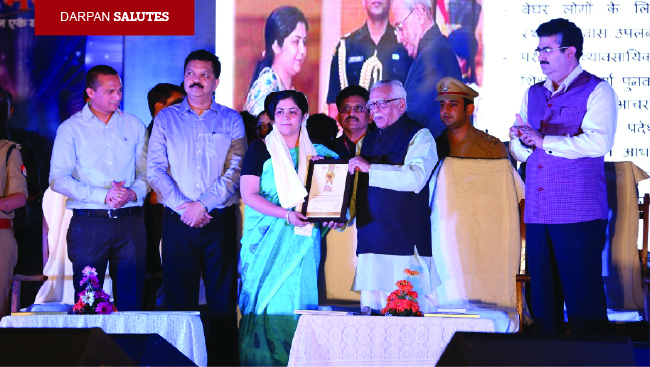
In 2014, it received the National Award for Child Welfare from the President of India, Pranab Mukherjee. Over the years, its founder, Shachi Singh, has been honored with numerous awards, including the Amazing Indian Award by Times Now and the Devi Award by the Chief Minister of Uttar Pradesh. She has also represented Uttar Pradesh on high-powered committees on child rights, influencing policy at the national level.
A Realization that Continues to Grow
Since its inception, Ehsaas has touched thousands of lives—but its true legacy lies in the philosophy it embodies: that every child is unique, every child matters, and every child deserves dignity. With the ideology of becoming ‘Friends of Street Children’ at its core, all Ehsaas volunteers try to ensure that this vision is sustained.
As Singh often reminds her team, Ehsaas’s work is not charity but responsibility. “Small groups of concerned individuals can change the world. Indeed, if the world has ever been changed, this is how it was changed.”