Bandi Chhorh Divas, a festival celebrated by Sikhs and devotees around the world, is a time of joy, reverence, and reflection on the values of freedom and compassion. With roots tracing back to the early 17th century, the tale unfolds at a time when Guru Hargobind Ji, the sixth Guru, was imprisoned in the Gwalior Fort by Emperor Jahangir. The Mughal ruler saw Guru Hargobind Ji’s influence as a potential threat and detained him. While in prison, the Guru’s spiritual presence inspired many, including 52 Rajput kings who were also imprisoned at the fort. After a period of detainment, Emperor Jahangir eventually ordered Guru Hargobind Ji’s release.
However, Guru Hargobind Ji refused to leave unless the 52 kings were also freed alongside him. The emperor agreed, but only on the condition that those who could hold onto Guru Hargobind Ji's cloak would be released. To fulfill this condition, Guru Hargobind Ji had a special cloak made with 52 tassels, allowing each king to hold onto one and walk out of the fort with him. This moment of collective liberation became known as Bandi Chhorh Divas, translating to ‘day of the release of prisoners.’
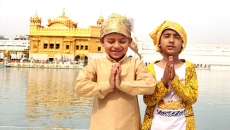
Bandi Chhorh Divas coincides with Diwali, sharing a similar theme of light triumphing over darkness. The festival is celebrated with fervor, particularly at the Golden Temple in Amritsar, where the temple is illuminated with thousands of lights. Even today, Bandi Chhorh Divas holds a special relevance as its themes of justice and resilience resonate with the ongoing struggles for human rights and equality.

The story of Bandi Chhorh Divas has deep spiritual significance, emphasizing selflessness, justice, and the welfare of all. Guru Hargobind Ji’s refusal to secure only his freedom and his commitment to the release of others embodies the ideal of working for collective well-being. It serves as a timeless reminder of the importance of standing up against injustice, advocating for the oppressed, and prioritizing the greater good over personal gain.
This essence of collective welfare serves as a powerful inspiration, reminding us that true leadership is about lifting others and striving for a more equitable society, especially significant in a world where many face various forms of injustice, discrimination, and social challenges. As such, it is essential to understand that celebrating any festival, for that matter, is not just about remembering a historical event but also about drawing strength from its teachings to address modern issues.
Fostering a sense of identity and continuity in a rapidly changing world, Bandi Chhorh Divas provides an opportunity to reflect on the importance of values like community and service, which are just as relevant today as they were centuries ago. In today's world, challenges like social media's divisive influence, political unrest, economic inequality, and rising polarization can be viewed through such compassion, encouraging us to confront these issues with a sense of responsibility, unity, and inclusivity, even in times of uncertainty.
Undoubtedly, the spirit of freedom is universal and timeless. Seeking the freedom of others is as crucial as securing one’s own, a principle that continues to inspire movements for social justice around the world. As we gather to light candles and offer prayers, let us commit to embodying all that Guru Hargobind Ji sought to teach us through his actions, adorned with values that teach us to be resilient, understanding, and ever-mindful of the struggles of others. Bandi Chhorh Divas is thus not only a celebration of historical significance but also a living tradition that continues to guide and inspire in the quest for a more just and compassionate world.