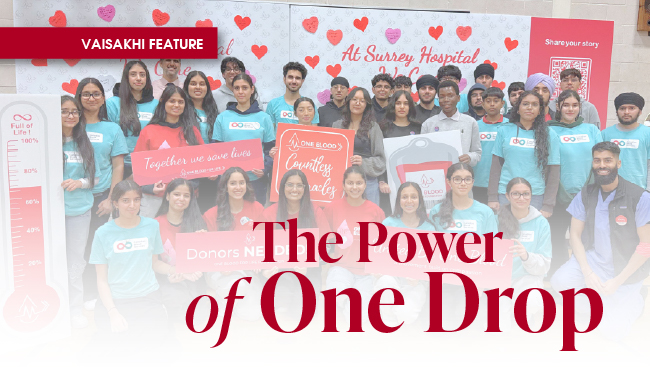
When aiding those who are in need, even the smallest acts can have a profound impact. As Sikhs, we are guided by the teachings of our Gurus to uplift and support those around us. Since the very beginning, the Sikh community has stood up for justice, compassion, and the protection of all people regardless of their identity, status, or circumstance.
When the first Guru, Sri Guru Nanak Dev Ji, began his continental travels on foot, he preached a simple but immensely powerful lesson: true spirituality is discovered through the seva (selfless service) of others. This is a philosophy that has been carried on by Sikhs all around the world and is the very premise of Sikhi as a whole. Today, as Vaisakhi signifies the birth of the Khalsa Panth, youth are being inspired to expand upon these principles beyond the traditional forms of Seva that we have all grown accustomed to.
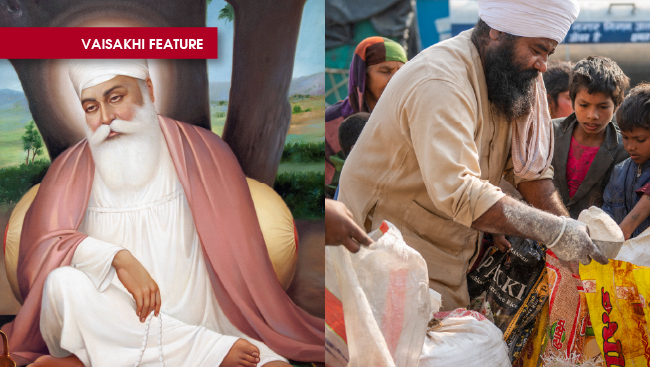
To Sikhs across the globe, Vaisakhi is more than a celebration of the harvest season or the time of new beginnings. It marks the birth of the Khalsa on March 30, 1699, a moment that established the identities of Sikhs as individuals committed to the equality and seva of humanity as a whole. As a community, Sikhs are recognized for their extensive community service to nourish others without judgment of others.
Though traditional practices of seva are prominent and deeply valued today, the spirit of the Khalsa continues to evolve through the youth who are constantly expanding upon these religious principles into broader spaces within Western society. Amongst this new wave of transformation is a growing movement to promote blood donation as an extraordinary form of seva. By giving the gift of life to another, we can contribute to a service that deeply resonates with youth and carries a significant humanitarian impact.
At the heart of the Sikh faith lies the belief "Sarbat da Bhala," translating to the concern for the well-being of all. It serves as a call for Sikhs to provide without expecting anything in return and to protect life wherever it is possible. The donation of blood directly elevates this core concept through allowing individuals the choice to save lives beyond their most immediate environment. It creates unity between donors as they are inspired to aid those in times of need. Despite the progression of society, blood donation remains an unfamiliar service. Recognizing the great urgency there is for blood donations within the Canadian healthcare system, youth today have been stepping up to make a difference through meaningful projects such as those upheld by the One Blood for Life Foundation.
"One donation can save up to three lives" is more than just a mere statistic; it reflects the core message of the One Blood for Life Foundation and its vision for humanity. As diversity within our Canadian society increases, young donors have been pushing to advocate for this form of seva to people of all backgrounds and beliefs. Many of Surrey's youth have committed themselves to this initiative, being united by their mutual desire to see this form of seva be promoted on a larger scale. For these donors, each and every donation made means a potential life saved, and it symbolizes how this quiet manner of service gives back in the utmost ways. To the Sikh youth who founded and led this cause, it was their devotion to the concept of "Sarbat da Bhala" that inspired them to give back to the Canadian healthcare system. Embodying the force of the Khalsa, young donors are lighting the spark across the nation to give blood.
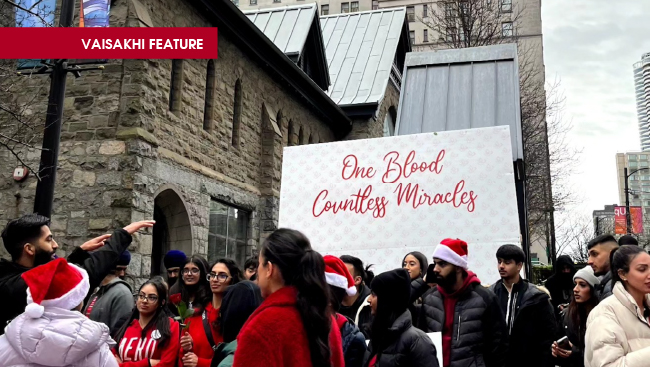
By organizing mobile blood donor clinics, raising awareness, and increasing participation, the Sikh youth in Surrey, British Columbia, have been able to contribute a substantial amount of support towards Canada's national registries. In the center of the scene in Surrey, the One Blood For Life Foundation, a youth-led public health advocacy initiative, has dedicated the past 13 years to contributing thousands of blood donors and stem cell registrants across the region. The work done by these groups serves as a reminder that meaningful change comes through real, tangible actions and not just through intentions.
With its humble beginnings as a small local effort, the One Blood for Life Foundation has transformed into a movement embodying the true spirit of the Khalsa. Reflecting on the values of inclusivity, we are actively observing how seva is being redefined today, and in doing so, we watch as the legacy of the Khalsa Panth transcends beyond the celebration of Vaisakhi but through the blood of our collective service to humanity.
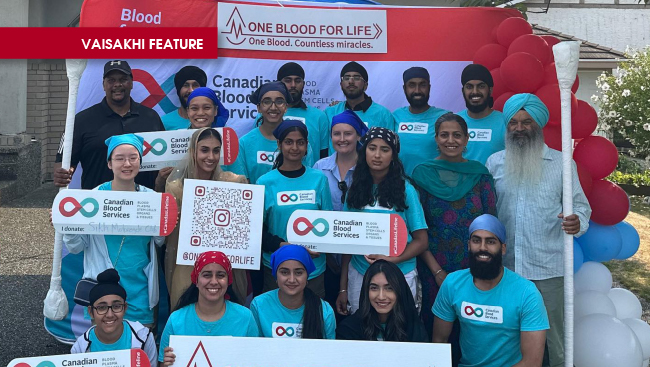
With the arrival of new beginnings this Vaisakhi season, take the opportunity to recognize the past and bloom towards the future. To celebrate the long-lasting legacy of the Khalsa and the traditions that have been carried through generations. On this upcoming Vaisakhi, let us embark on the journey towards the future of seva. Carry forth the principles of Sikhi that we have practiced for generations before us. Take the spirit of Vaisakhi into our minds and let seva flow through your veins. One donor, one drop, and a single pulse that reminds us we are all of one blood and one spirit.