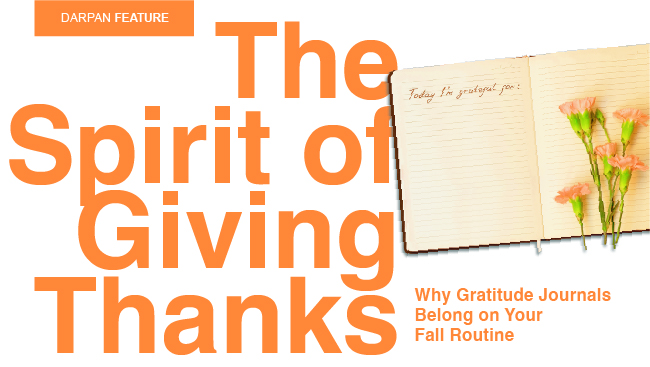
In a world that often moves too fast, the simple act of pausing to reflect can feel revolutionary. Amid packed schedules, scrolling timelines, and constant notifications, many people are turning to a time-tested yet increasingly relevant tool: the gratitude journal.
More than a diary or planner, a gratitude journal is a dedicated space where individuals intentionally reflect on the things—big or small—that bring joy, peace, and appreciation to their lives.
What Is a Gratitude Journal?
“A gratitude journal is a space where you intentionally reflect on what’s going well in your life,” explains Navreen Kaur, registered clinical counsellor at Mind Matters Counselling. “Regularly engaging in this practice not only grounds us emotionally but also helps rewire our brains to notice the good.” This act of reflection isn't just feel-good fluff; it’s rooted in science. “Over time, gratitude strengthens the neural pathways associated with optimism, compassion, and emotional resilience,” Kaur notes. “You start to experience a shift in perspective—from ‘glass half empty’ to ‘glass half full.’”
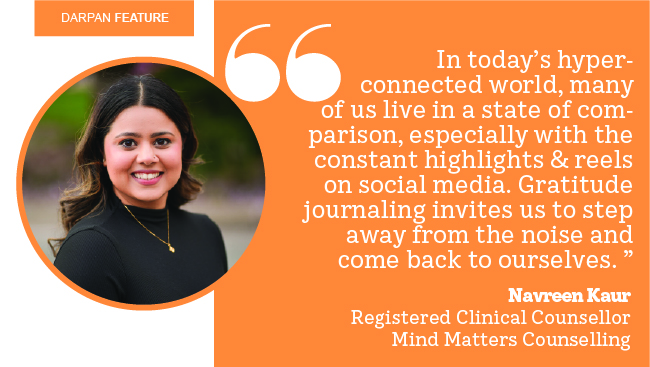
Similarly, Pavneet Sandhu Gill, registered clinical counsellor and owner at Luxia Counselling, describes gratitude journaling as a simple yet transformative practice. “It helps shift your focus from stress to appreciation,” she says. “Life moves quickly, and constant demands can leave us feeling stressed and distracted. Taking a few minutes to note what we’re grateful for helps us slow down and focus on the moments that matter most.”
Why the Surge in Popularity?
Gratitude journals have seen a significant rise in popularity, particularly in recent years. As our lives become increasingly digital and fast-paced, this analog activity offers a grounding experience. “In today’s hyper-connected world, many of us live in a state of comparison, especially with the constant highlights & reels on social media,” says Kaur. “Gratitude journaling invites us to step away from the noise and come back to ourselves.”
Gill echoes this sentiment: “People are drawn to it because it offers a rare chance to pause and truly savor the quiet joys that often go unnoticed.” In a culture that emphasizes productivity and perfection, the practice reminds us that “what we have—and who we are—is enough,” adds Kaur.
How to Start a Gratitude Journal
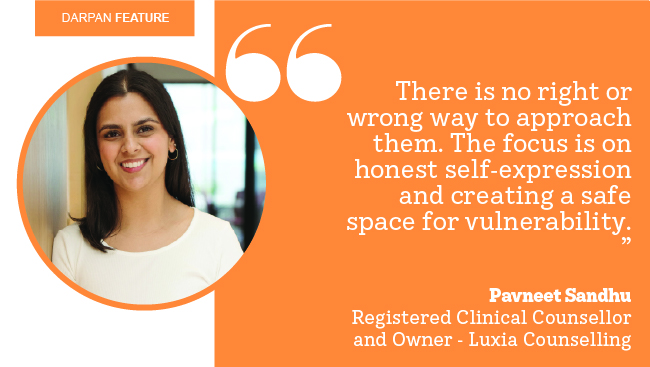
There’s no one-size-fits-all method for gratitude journaling. “Gratitude journals are a personal and authentic reflection of one’s true self,” highlights Gill. “There is no right or wrong way to approach them. The focus is on honest self-expression and creating a safe space for vulnerability.” Some people write full paragraphs. Others jot down bullet points. Some incorporate drawings, poems, or even photos. “It is essential to engage in whatever method aligns most genuinely with your unique identity,” she encourages.
What matters is consistency. Just five minutes a day can start to rewire the brain toward a more optimistic and resilient mindset. “Our brains are not programmed to think positively,” Gill details. “We have to practice, practice, practice!” If you’re unsure where to begin, both Kaur and Gill recommend diving into specific, reflective prompts rather than generic lists.
Journal Prompts to Get You Started
Kaur’s beginner-friendly questions include:
- What was one moment today where I focused on what I have, rather than what I’m missing?
- Where in my life can I intentionally shift my focus to bring in more gratitude?
- How can I appreciate myself for something I’ve done, even if it feels small?
Gill adds several thought-provoking suggestions:
- A memory that brings me comfort and joy is...
- I deserve kindness from myself because...
- I feel most like myself when I am...
- What makes me unique is...
- A challenge I overcame that I’m thankful for is…
- Today, I felt truly present during…
- A recent act of kindness that touched me was…
- A belief I used to hold about myself but have since changed is...
Beyond Words on a Page
While the practice may appear simple, its effects are far-reaching. “Gratitude journaling can serve as a subtle practice of rewiring the brain to notice positive patterns and strengths that often go overlooked in everyday life,” says Gill. It’s not just about looking on the bright side — it’s about noticing that there is a bright side to begin with. Kaur emphasizes that the goal isn’t perfection or profound insights. “The beauty of this practice is in its simplicity and authenticity. You’re creating a space for yourself — not for anyone else’s approval.”
In challenging times, gratitude journals become more than a wellness trend—they can be a lifeline. “This mindset change can lead to better mental clarity, reduced stress, and a deeper sense of emotional well-being,” reveals Kaur.
Especially as Thanksgiving season takes over, there’s no better time to start a gratitude journal: a gentle, powerful way to celebrate what’s already good, and rediscover joy in the everyday. If you’re feeling overwhelmed, disconnected, or just in need of a little peace, consider picking up a pen. Gratitude journaling might just be the reset your mind and spirit needs. In the words of Gill: “There’s something magical about slowing down to notice the good. It’s not about ignoring challenges—it’s about remembering we still have reasons to smile.”