

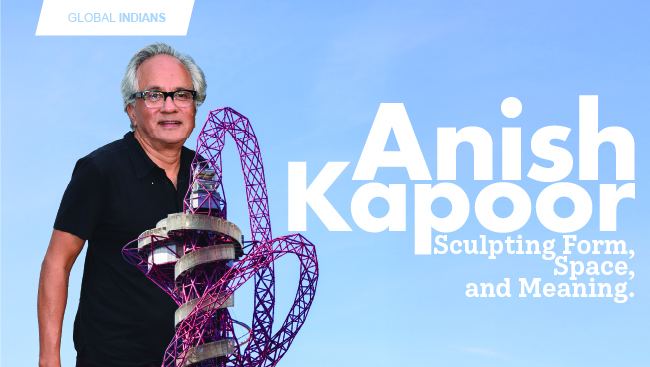
When Sir Anish Kapoor emerged from Mumbai’s bustling streets in 1954 to become one of the most influential sculptors of our time, few could have imagined the scale of his legacy.
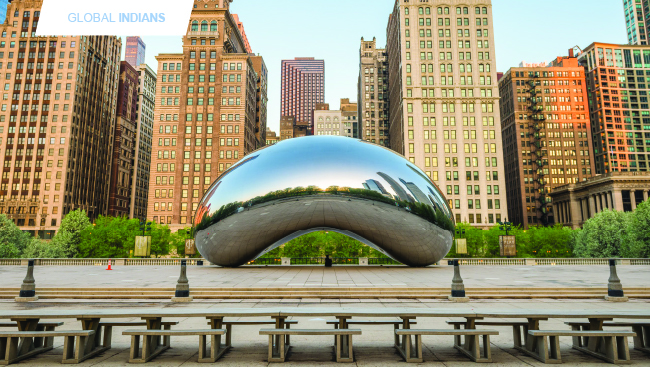
Today, his works, from the reflective wonder of Cloud Gate (“The Bean”) in Chicago to the spiralling ArcelorMittal Orbit in London, have transformed skylines and redefined public art.
Now, at 71, Kapoor has entered perhaps his boldest chapter yet, where art and activism meet.
Blood on a Canvas: The Protest of BUTCHERED
Earlier in August, Kapoor unveiled one of his boldest and most politically charged works. In collaboration with Greenpeace, activists installed his 12-by-8-metre artwork, titled BUTCHERED, onto Shell’s Skiff gas platform in the North Sea.
The lavender canvas was dramatically drenched in a mixture of seawater, beetroot powder, coffee granules, and dye transforming it into a blood-red cascade against the steel structure of fossil fuel extraction.
Kapoor himself described the work with stark simplicity, as told to The Guardian: “I call it BUTCHERED… blood on a canvas. A reference to the destruction—the bleeding—of our globe, of our state of being.” The imagery was visceral, urgent, and deliberate, intended to make viewers confront the invisible costs of fossil fuel dependency.
As reported on the internet, he further explains, “I wanted to make something visual, physical, visceral to reflect the butchery they are inflicting on our planet: a visual scream that gives voice to the calamitous cost of the climate crisis, often on the most marginalised communities across the globe.”
The piece, widely regarded as the first fine art installation on an active fossil fuel platform, has already been etched into the history of protest art.
Sculpting Wholeness: Kapoor’s Lifelong Vision
Though BUTCHERED is his latest provocation, Kapoor’s broader body of work reveals a lifelong fascination with scale, perception, and void. From his early pigment sculptures of the 1980s, which seemed to emerge organically from the ground, to later mirrored pieces like Sky Mirror and vast installations such as Marsyas at Tate Modern, the virtuoso has continually challenged the boundaries of form and space.
For him, the void is as important as the object itself. His works draw viewers into an active relationship with space; sometimes reflective, sometimes disorienting, always transformative.
A Global Voice Rooted in Heritage
Born in India and shaped by the cultural richness of his heritage, he has become a global artistic voice while staying connected to his roots. His dual identity both Indian and British embodies a diasporic journey of heritage, ambition, and creativity. Across decades, Kapoor has shown that art can transcend boundaries, connecting people through shared experiences of space, form, and emotion.
The Legacy of a Sculptor
From Mumbai pigments to Chicago steel, from the reflective allure of Cloud Gate to immersive voids like Marsyas, Kapoor’s career is a testament to reinvention and vision. He does not simply make objects but creates mythologies that challenge perception and invite reflection. Sculpture in Kapoor’s hands becomes an exploration of space, light, and presence, asking viewers to engage, question, and experience the world anew. His works, whether monumental or intimate, continue to redefine what art can be and how it can shape the way we see ourselves and our surroundings.


