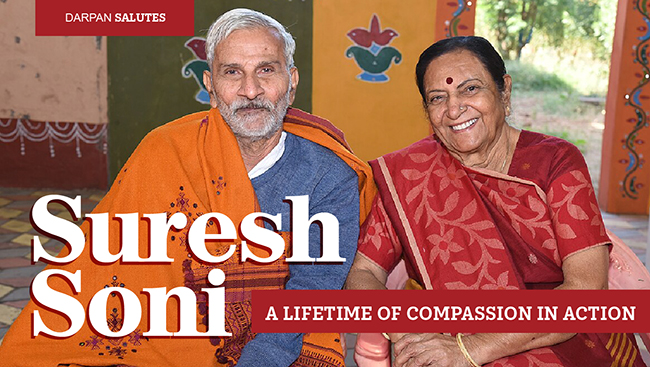
At 80, most people are winding down. Suresh Soni is still building. The 2024 Padma Shri awardee has dedicated over five decades of his life to those society has forgotten: leprosy patients, people with mental disabilities, the blind, and children born into suffering.
But more than the sheer scale of his impact, it’s the unwavering humanity behind his mission that makes Soni’s story extraordinary.
Born in 1944 in Gujarat, Soni was a gifted student. He earned a master's degree in mathematics from MS University of Baroda, graduating first class with distinction and setting a record that remains unbroken.
He began his professional life as a lecturer at the university, positioned for a secure and prestigious academic future. But quiet restlessness gnawed at him. In the slums of Baroda, he saw people leprosy begging, disfigured and discarded, denied the most basic dignity. And he couldn’t look away. “I realized I couldn’t just lecture students about equations while ignoring people suffering on the streets,” Soni recalls. “Leprosy wasn’t just a medical issue. It was a human one.”
In 1970, he walked away from his career, comfort, and status. He began working directly with leprosy patients—giving them medicines, dressing wounds, and helping them leave behind begging through vocational training. Eventually, he helped establish the Shram Mandir Trust, a unique rehabilitation center for leprosy beggars. When ideological differences forced him to part ways with the trust in 1988, Soni did what few would: he started again from scratch. “At that time, I had no money, no land, no institutional support. Just the goodwill of people who knew the work I had done,” he said.
That trust—named Sahyog Kushtha Yagna Trust—was founded in June 1988. A local farmer offered him 31 acres of land with a tube well, completely free of charge. On that bare patch of earth in Sabarkantha district, Soni began a new experiment in compassion. Within months, he welcomed 20 leprosy patients and six children to the site.
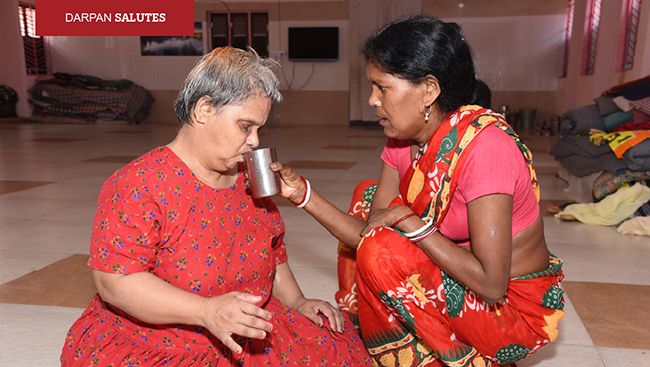
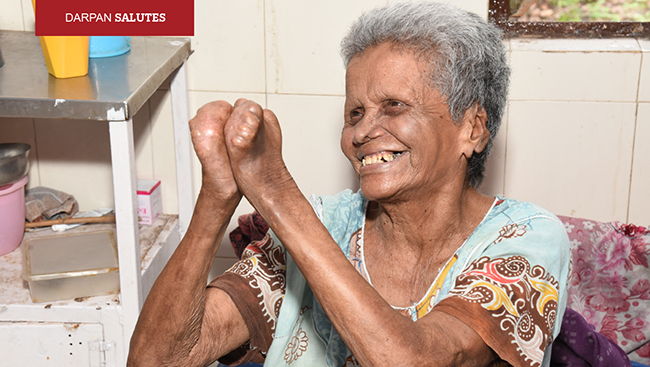
Over the years, that humble beginning evolved into Sahyog Village: a vibrant residential campus now home to over 1,000 people, including leprosy patients, mentally challenged adults, people with schizophrenia, disabled persons, and children of destitute parents. There is also a 45-bed hospital on-site, schools up to the eighth standard, vocational training, cultural activities, and communal prayers. The campus is powered by solar energy, has an election booth, a crematorium, and a temple that features the icons of all major world religions.
This isn’t just a charitable shelter—it’s a model of inclusive living. Residents work in various roles—spinning khadi, farming, helping in the kitchen, doing office work, or caring for others in need. “We don’t just treat diseases here. We treat isolation,” Soni said. “People are not untouchables here. They are our family.” On Thursdays, the community gathers to sing songs. Every evening, lamps are lit outside every home to offer prayers, not just for their own peace, but for those who have helped and supported Sahyog. “We light a lamp for the people who helped us, those who remember us, and those we’ve yet to serve,” he said. “It keeps us grounded in gratitude.”
Despite running an operation that requires over ₹5.25 crores annually, Sahyog does not accept foreign aid or government maintenance grants. “Since 2018, we decided not to take even a rupee of state maintenance grants. If the work is sincere, support will come,” he said. That support comes from everyday donors, people moved by the purpose and purity of the work.
Soni’s legacy is also one of empowerment. Under his leadership, Sahyog helped organize historic reconstructive surgery camps across Gujarat. In collaboration with the Gujarat government and recognized by the Central Government, the trust facilitated over 5,200 surgeries—many during back-to-back camps that lasted hundreds of hours. These initiatives earned national acclaim and personal appreciation from Dr. A.P.J. Abdul Kalam. But for Soni, the real reward lies elsewhere. “There’s a boy here who came with his leprosy-afflicted mother. Today, he’s an engineer. Another girl is now a government officer. These are the real Padma awards for me,” he said with quiet pride.
The Padma Shri recognition in 2024 came as a surprise. “When I got the call, I was shocked,” he shared. “I never thought someone working silently in a small village would be recognized by the Government of India.” And yet, nothing about the award has changed his day-to-day life. He continues to live simply on the campus, helping new residents settle in, keeping meticulous track of donations, and guiding staff. “Work goes on. We had new admissions this week. People still need help,” he said plainly.
In a world that often celebrates visibility over value, Suresh Soni’s life is a powerful countercurrent. It is a life of quiet revolution—of choosing service over success, people over prestige. His is the kind of legacy that can’t be built overnight, only brick by brick, prayer by prayer, and life by life.