Quote I Live by:
Never doubt that a small group of thoughtful, committed citizens can change the world; indeed, it's the only thing that ever has.
-Margaret Mead
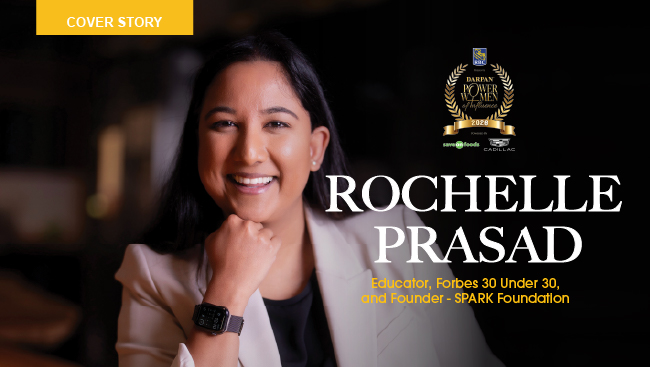
For Rochelle Prasad, the path to global education policy began long before boardrooms and international forums. It started at home, helping her immigrant parents navigate life in a new country.
Her parents immigrated to Canada from Fiji in the early 1990s after political unrest forced many Indo-Fijian families to leave. Like many immigrant households, the transition came with challenges — language barriers, unfamiliar systems, and the quiet pressure of starting over. “As a kid, I was translating documents, helping them at the doctor’s office, figuring out taxes or paperwork,” Rochelle recalls. “I grew up really fast because I had to help them navigate things.”
Those early responsibilities shaped the lens through which she would later see the world. Watching her parents adapt to a new system made her acutely aware of the gaps that exist for newcomers and marginalized communities. “I started noticing barriers early,” she says. “And when you see those gaps young, you start asking how systems could work better.”
Her instinct to challenge systems showed up early. In elementary school, Rochelle launched her first advocacy campaign after noticing that school buses didn’t have seatbelts. Instead of going on a field trip, she stayed behind to organize a petition calling for change, an experience that would become her first introduction to policy advocacy. “That was my first campaign,” she says with a laugh. “I realized early on that if something didn’t seem right, you could speak up about it.”
Years later, that same instinct led Rochelle to found the SPARK Foundation, a youth-led nonprofit focused on removing barriers to education. Over more than a decade, the organization has built schools in Kenya and Ecuador, provided scholarships and resources to students around the world, and supported programs that have impacted more than half a million young people.
Today, Rochelle works at the intersection of education, policy, and global advocacy. Alongside teaching high school and post-secondary students, she advises governments and multilateral institutions through the United Nations system on youth engagement and education policy.
She describes her career as what she calls a “squiggly path”—one that moved between nonprofit leadership, teaching, advocacy, and even a municipal election campaign before returning to education policy. “There wasn’t a straight line to where I am,” she says. “But every step taught me something about how systems work, and how they can change.”
Her Indo-Fijian heritage continues to shape the way she leads. In classrooms filled with students from diverse backgrounds, Rochelle believes representation and empathy matter. “When you’ve lived those experiences yourself, you understand how to reach students who might feel overlooked,” she says. “It teaches you how to lead with empathy.”
Despite international recognition for her work—including being named to the Forbes 30 Under 30 list and receiving the Governor General’s Award in Commemoration of the Persons Case—Rochelle remains grounded in a simple belief.
At the heart of everything she does is the idea that education is more than a classroom experience. “Education is the most powerful tool we have to change the world,” she says. “And every young person deserves access to it.”
Q&A
Q- This year’s International Women’s Day theme is ‘Give to Gain.’ What does that phrase mean to you personally?
A- I’ve always believed in contributing before expecting recognition. When people give in a genuine way, trust and community grow. And when one woman opens a door, she holds it open for others, too.
Q- What’s one lesson you had to learn the hard way that shaped the woman you are today?
A- Learning that it’s okay to ask for help. For a long time, I felt like I had to do everything on my own. Realizing that you’re not a burden for needing support was a big lesson for me.
Q- Who is a woman you deeply admire, and what about her inspires you most?
A- I really admire Annalena Baerbock, who has served in leadership within the United Nations General Assembly. What struck me most was how intentionally she included young people in conversations about diplomacy and policy.
Q- What’s one thing you hope more women give themselves permission to do?
A- Rest. There’s often this pressure to always be doing something or proving something. Learning to rest without feeling guilty is something I’m still working on myself.