
Every Canada Day, I watch my parents the way you watch someone holding two things in their hands at once. There is pride—real, hard-won pride in the country that became their home. And there is something quieter underneath it, a tenderness that surfaces in an old song, a familiar dish, a story that begins with “back home.” I grew up in the space between those two feelings. I am not an immigrant, but I am the child of immigrants, and that inheritance has shaped how I understand this country and this day.
The grief of immigration is rarely spoken aloud. When people leave their homeland, they leave more than a place. They leave the smell of a particular street, the sound of a language spoken without effort, the grandparents whose laughter now travels through a phone screen. They are often told to focus on the gains—the opportunity, the safety, the future—and those gains are real. But the smaller, sacred losses do not disappear simply because the decision was the right one.
And so, to the immigrant families reading this: your grief is seen. If you are the one who packed a life into a few suitcases and began again in an unfamiliar place, please know that the ache you carry is not weakness or ingratitude. It is love—love for a home that shaped you. You are allowed to miss it fiercely and to build a new life here at the same time. Those of us raised in your homes have watched your quiet courage, and we carry it forward with gratitude.
What makes this country remarkable is that you were never asked to leave everything behind. This is the quiet genius of Canada. In 1971, Canada became the first country in the world to adopt multiculturalism as official policy, later affirming it in the Charter of Rights and Freedoms and the Canadian Multiculturalism Act. It is one of the few places on earth where the law itself says that you can become fully Canadian without erasing who you were. You are invited to bring a piece of home with you—your language, your faith, your festivals, your food—and to weave it into the larger fabric of the nation.
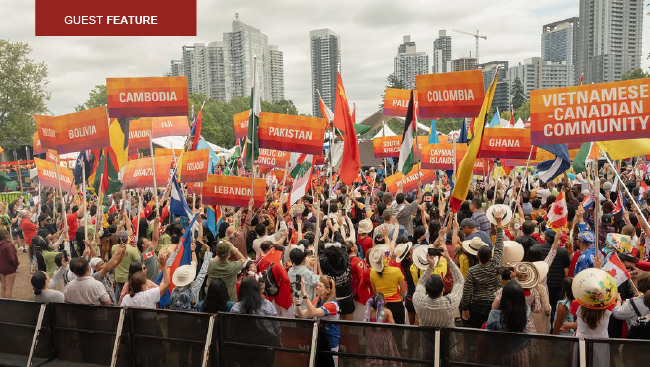
That idea changes everything. In so many places, belonging demands surrender: assimilate, blend in, disappear into the majority. Canada offered immigrant families a different bargain. It imagined a country not as a melting pot that dissolves difference, but as a mosaic that arranges it into something beautiful. The Diwali lights, the Eid celebrations, the Gurudwara langar feeding strangers, the heritage languages spoken at the dinner table—none of these make a person less Canadian. They are Canadian. They are the texture of a nation that decided its strength would come from its plurality rather than despite it.
The children of immigrants are the living proof of that vision. We are raised in two worlds at once, fluent in the customs of our parents’ homeland and the country of our birth. We translate between generations, carry recipes and proverbs forward, and move through life with a doubled sense of belonging. What our parents experienced as loss, we often experience as inheritance—a richness, a rootedness in more than one place. That is the gift you gave us, and only a country like this could make it possible.
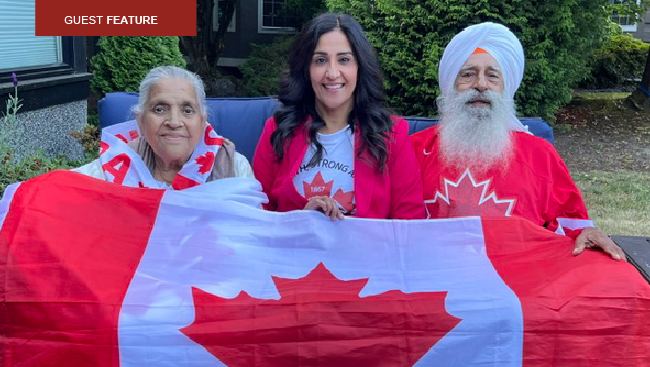
None of this erases the deeper history of these lands. Long before Confederation, the First Nations, Inuit, and Métis peoples lived here, and their presence and stewardship remain part of who we are as a country. To honor the home that welcomed our families is also to remember, with respect, the peoples who were here first. That truth and the pride of this day can sit side by side.
So, this Canada Day, to every immigrant family who chose this country and was chosen by it: thank you. You did not have to choose between where you came from and where you were going. You brought a piece of home, and in doing so you helped build something rare and beautiful—a country made stronger by the many homes its people carry within them, and a model the world would do well to follow.