Thursday, February 12, 2026
ADVT 
Health

100 gm mango daily may cut blood sugar in obese

Darpan News Desk IANS, 09 Sep, 2014 08:46 AM
  • 100 gm mango daily may cut blood sugar in obese
The tasty and juicy mango has just got a shot in the arm. According to research, regular consumption of the fruit by obese adults may lower blood sugar levels and does not negatively impact body weight.
 
"Our results indicate that daily consumption of one half of a fresh mango (about 100 grams) may help lower blood sugar in obese individuals," said Edralin Lucas, an associate professor from the department of nutritional sciences at Oklahoma State University's college of human sciences.
 
Mangoes contain many bio-active compounds, including mangiferin, an antioxidant that contributes to the beneficial effects of mango on blood glucose.
 
"In addition, mangoes contain fibre which can help lower glucose absorption into the blood stream," Lucas added.
 
During the study, 20 adults aged 20 to 50 years with a Body Mass Index (BMI) of 30 to 45 consumed 10 grams of freeze-dried or dehydrated mango.
 
Their dietary intake was monitored via three-day food records assessed at baseline and after six and 12 weeks of mango supplementation.
 
Researchers found that after 12 weeks, participants had reduced blood glucose and this glucose lowering effect was seen in both males and females.
 
No changes were observed in overall body weight.
 
However, hip circumference was significantly lower in males but not females.
 
"We believe mangoes may give obese individuals a dietary option in helping them maintain or lower their blood sugar," Lucas added.
 
However, the precise component and mechanism has yet to be found and further clinical trials are necessary.
 
Mangoes are an excellent source of the anti-oxidant vitamins C and A as well as folate. They are also a good source of copper and vitamin B6.
 
The study appeared in the journal Nutrition and Metabolic Insights.

MORE Health ARTICLES

Autism risk higher among kids with parents in technical jobs

Autism risk higher among kids with parents in technical jobs
Children of parents who are in technical occupations are more likely to have an autism spectrum disorder (ASD) and a more serious form of autism, a study suggested.

Autism risk higher among kids with parents in technical jobs

Antarctic ice sheet collapse has begun, shows research

Antarctic ice sheet collapse has begun, shows research
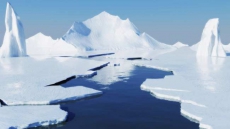
In an alarming find, scientists have discovered that the collapse of West Antarctic ice sheet - that holds enough water to raise global seas by several feet - has already begun.

Antarctic ice sheet collapse has begun, shows research

Now, a virtual pet to help obese kids lose weight

Now, a virtual pet to help obese kids lose weight
If your kids are gaining weight because they spend more time indoor playing video games instead of playing outdoor, you may soon turn technology on its head - all thanks to a virtual pet designed to induce kids to physical activities.

Now, a virtual pet to help obese kids lose weight

Eldest among siblings? Check if you are more conservative

Eldest among siblings? Check if you are more conservative
If you are the eldest among all your siblings, chances are that you would be averse to change and prefer conformity than those who follow you in the family, a study said.

Eldest among siblings? Check if you are more conservative

State Goes Missing in Healthcare in India; 70 Percent is Private

State Goes Missing in Healthcare in India; 70 Percent is Private
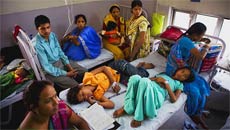
More than 70 percent of healthcare in India is provided by corporate houses as a result of which poor people are not able to afford the high cost of medical care provided by private hospitals, health experts have said.

State Goes Missing in Healthcare in India; 70 Percent is Private

Canadians top drinkers, Indians not far behind: WHO

Canadians top drinkers, Indians not far behind: WHO
In a latest survey released by the WHO, Canadians are drinking more alcohol than most of the rest of the world - followed by Americans

Canadians top drinkers, Indians not far behind: WHO