Thursday, February 12, 2026
ADVT 
Health

A novel way to spot dyslexia in kids

Darpan News Desk IANS, 16 Sep, 2014 08:59 AM
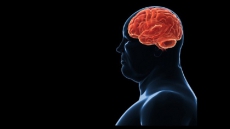
    There could soon be a tool to spot kids at risk of developing reading difficulties before they experience the challenges as researchers have found that white matter volume in the brain is key to development of reading abilities.
     
    The developmental course of children's white matter volume may be used to predict his/her ability to read, the findings showed.
     
    "We show that white matter development during a critical period in a child's life, when they start school and learn to read for the very first time, predicts how well the child ends up reading," said Fumiko Hoeft, a senior author and an associate professor at the University of California, San Francisco in the US.
     
    Doctors commonly use behavioural measures of reading readiness for assessments of ability.
     
    Other measures such as cognitive ability, early linguistic skills, measures of the environment such as socio-economic status and whether there is a family member with reading problems or dyslexia are all common early factors used to assess risk of developing reading difficulties.
     
    "What was intriguing in this study was that brain development in regions important to reading predicted above and beyond all of these measures," Hoeft added.
     
    In the study, researchers examined brain scans of 38 kindergarteners as they were learning to read formally at school and tracked their white matter development until third grade.
     
    Left hemisphere white matter in the temporo-parietal region just behind and above the left ear - thought to be important for language, reading and speech - was highly predictive of reading acquisition, the researchers found.
     
    The study appeared online in the journal Psychological Science.

    MORE Health ARTICLES

    Toddler's eye contact may signal autism risk

    Toddler's eye contact may signal autism risk
    Low levels of joint attention - the act of making eye contact with another person to share an experience - without a positive affective component (a smile) in the...

    Toddler's eye contact may signal autism risk

    Brain next frontier to treat obesity

    Brain next frontier to treat obesity
    Therapies aimed at areas of the brain responsible for memory and learning could lead to better treatment of obesity and dementia, says a study...

    Brain next frontier to treat obesity

    About 13 percent new mothers avoid sex

    About 13 percent new mothers avoid sex
    Have you rejected love-making calls from your hubby after childbirth? Take heart as you have not committed a sin....

    About 13 percent new mothers avoid sex

    Monitor pulse after stroke to avoid second

    Monitor pulse after stroke to avoid second
    Regularly monitoring your pulse after a stroke or the pulse of a loved one who has experienced a stroke can prevent a second stroke....

    Monitor pulse after stroke to avoid second

    Condom that fights sexually-transmitted diseases

    Condom that fights sexually-transmitted diseases
    Imagine a condom that not only stops pregnancy but also kills germs that can lead to sexually transmitted diseases (STDs)....

    Condom that fights sexually-transmitted diseases

    Impulsive behaviour linked to brain connectivity

    Impulsive behaviour linked to brain connectivity
    In what could help better understand behavioural problems and social adaptation difficulties in children, researchers have found that patterns of brain connectivity...

    Impulsive behaviour linked to brain connectivity