Tuesday, December 23, 2025
ADVT 
Health

Advanced cancers returned to prepandemic levels, according to a reassuring report

Darpan News Desk The Canadian Press, 22 Apr, 2025 11:25 AM
  • Advanced cancers returned to prepandemic levels, according to a reassuring report

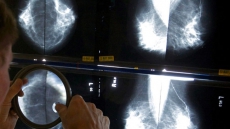
Many Americans were forced to postpone cancer screenings— colonoscopies, mammograms and lung scans — for several months in 2020 as COVID-19 overwhelmed doctors and hospitals.

But that delay in screening isn't making a huge impact on cancer statistics, at least none that can be seen yet by experts who track the data.

Cancer death rates continue to decline, and there weren't huge shifts in late diagnoses, according to a new reportpublished Monday in the journal Cancer. It's the broadest-yet analysis of the pandemic’s effect on U.S. cancer data.

In 2020, as the pandemic began, a greater share of U.S. cancers were caught at later stages, when they're harder totreat. But in 2021, these worrisome diagnoses returned toprepandemic levels for most types of cancer.

“It is very reassuring,” said lead author Recinda Sherman of the North American Association of Central Cancer Registries. “So far, we haven’t seen an excess of late-stage diagnoses," which makes it unlikely that there will be higher cancer death rates tied to the pandemic.

Similarly, the number of new cancer cases dropped in 2020, but then returned to prepandemic levels by 2021. The size of the 2020 decline in new cancers diagnosed was similar across states, despite variations in COVID-19 policy restrictions. The researchers note that human behavior and local hospital policies played more of a role than state policy restrictions.

Late-stage diagnoses of cervical cancer and prostate cancer did increase in 2021, but the shifts weren't large. The data analysis goes only through 2021, so it’s not the final word.

“We didn't see any notable shifts,” Sherman said. “So it’s really unlikely that people with aggressive disease were not diagnosed during that time period.”

The report was produced by the North American Association of Central Cancer Registries, the National Cancer Institute, the Centers for Disease Control and Prevention and the American Cancer Society.


MORE Health ARTICLES

How To Wean Kids Away From Maggi And Other Noodles

So what do you do if your child hankers for noodles, now that Maggi and other brands are under a cloud? Experts say one should go for the generic varieties or make alternatives more interesting.

How To Wean Kids Away From Maggi And Other Noodles

Want To Enjoy Main Course? Avoid Good Appetizer

Want To Enjoy Main Course? Avoid Good Appetizer
A good appetizer has the potential to significantly change how the main course is enjoyed, says a study by a food science professor.

Want To Enjoy Main Course? Avoid Good Appetizer

Viagra Doesn't Cause Skin Cancer, Shows Study

Viagra Doesn't Cause Skin Cancer, Shows Study
Lifestyle factors, not Viagra, put users of erectile dysfunction drugs at higher risk of melanoma, a deadly form of skin cancer, says a study.

Viagra Doesn't Cause Skin Cancer, Shows Study

Smoking Linked To Breast Cancer In Young Women

Smoking Linked To Breast Cancer In Young Women
Smoking may increase the risk of dying early in pre-menopausal women with breast cancer, a research said.

Smoking Linked To Breast Cancer In Young Women

Stillbirth In First Pregnancy Ups Risk On Second Time

Stillbirth In First Pregnancy Ups Risk On Second Time
Women who have experienced a stillbirth have up to a four-fold increased risk of stillbirth in a second pregnancy compared to those who had an initial live birth, says a new study led by an Indian-British scientist.

Stillbirth In First Pregnancy Ups Risk On Second Time

Early Stage Breast Cancer Patients Getting Too Many Imaging Tests: Study

Early Stage Breast Cancer Patients Getting Too Many Imaging Tests: Study
Guidelines say that women diagnosed with Stage 1 or Stage 2 breast cancer don't need additional MRIs or CT scans because the risk that their cancer has spread is very low.

Early Stage Breast Cancer Patients Getting Too Many Imaging Tests: Study