Friday, December 26, 2025
ADVT 
Health

Artificial Light At Night Can Make You Feel Sick

Darpan News Desk IANS, 19 Mar, 2015 01:55 PM
    Over-exposure to artificial light at night has serious long-term health implications like tendency to breast cancer, obesity, diabetes, depression, and possibly other forms of cancer, says a new study.
     
    "It's a new analysis and synthesis of what we know up to now on the effect of lighting on our health," said Richard Stevens University of Connecticut, Farmington (Uconn).
     
    "We don't know for certain, but there's growing evidence that the long-term implications of this have ties to breast cancer, obesity, diabetes, depression, and possibly other form of cancers," he said.
     
    Inadequate exposure to natural light during the day and overexposure to artificial light at night is not conducive to the body's natural sleep/wake cycle.
     
    Stevens and co-author Yong Zhu from Yale University explained the known short-term and suspected long-term impacts of circadian disruption in an article published in the British journal Philosophical Transactions of the Royal Society B.
     
    "It's become clear that typical lighting is affecting our physiology," said Stevens.
     
    "But lighting can be improved. We're learning that better lighting can reduce these physiological effects. By that we mean dimmer and longer wavelengths in the evening, and avoiding the bright blue of e-readers, tablets and smart phones," he added.
     
    Those devices emit enough blue light when used in the evening to suppress the sleep-inducing hormone melatonin and disrupt the body's circadian rhythm, the biological mechanism that enables restful sleep.
    MORE Health ARTICLES

    Technology to catch dozing drivers on the go

    Technology to catch dozing drivers on the go
    Long rides at night can now become a lot more pleasant and safe if you listen to researchers who have developed an inexpensive and easier way to find out when the person behind the wheel is about to nod off.

    Technology to catch dozing drivers on the go

    Astronauts may face attention deficit risks

    Astronauts may face attention deficit risks
    Astronauts who are radiation-sensitive need to take extra care to protect their brains as they may face risks of attention deficit and slower reaction times, a study suggests.

    Astronauts may face attention deficit risks

    Befriend a cyber buddy to stay motivated

    Befriend a cyber buddy to stay motivated
    Although a human partner is a better motivator during exercise, a software-generated cyber partner can also be effective in making you work a little extra, research reveals.

    Befriend a cyber buddy to stay motivated

    New method to treat cocaine addiction effectively

    New method to treat cocaine addiction effectively
    There is hardly any effective medications for cocaine addiction, but researchers have now discovered a new compound that can halt cocaine addiction, raising hope for new treatment for drug addicts.

    New method to treat cocaine addiction effectively

    How bariatric surgery can help control diabetes

    How bariatric surgery can help control diabetes
    That bariatric surgery, or obesity surgery, leads to weight loss is well known, but researchers have now identified the mechanism why obesity surgery also leave positive effects on diabetes and heart diseases.

    How bariatric surgery can help control diabetes

    Now, 3D-printed plaster cast to heal wound faster

    Now, 3D-printed plaster cast to heal wound faster
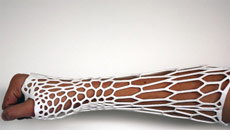
    In what could revolutionise plaster cast technology, a Turkish design student has unveiled a slick 3D-printed cast with ventilation holes that reduces healing time by around 40 percent than currently used plaster casts.

    Now, 3D-printed plaster cast to heal wound faster