Saturday, December 20, 2025
ADVT 
Health

Bad sleep quality, not duration, triggers insomnia

Darpan News Desk IANS, 09 Oct, 2014 06:40 AM
    Sleep problems like insomnia being reported among the elderly are more likely because of bad sleep quality and not their duration.
     
    "Older adults may complain of waking up too early and not feeling rested despite accumulating substantial hours of sleep," said Linda Waite, the Lucy Flower professor in urban sociology at the University of Chicago in the US.
     
    The study found discrepancies between self-reported insomnia and outcomes recorded on a sleep-monitoring device.
     
    The actigraph measurements showed that most of the older adults got sufficient amounts of sleep.
     
    The actigraph provided data that showed the average duration of sleep period among the study participants was 7.9 hours and the average total sleep time was 7.25 hours
     
    "This indicates that the majority of older adults are getting the recommended amount of sleep and usually not having common sleep problems," Waite added.
     
    Respondents who reported waking up more frequently during the night had more total sleep time.
     
    "This suggests that a question about feeling rested may tap into other aspects of older adults' everyday health or psychological experience," Waite noted.
     
    Older adults' perception of sleep does not always match what is actually happening when a more objective assessment is used to monitor sleep patterns and behaviours, the study, published in the Journal of Gerontology: Medical Sciences, pointed out.
     
    It used data from 727 participants in the National Social Life, Health and Aging Project who were randomly invited to participate in an "Activity and Sleep Study".
     
    "Our findings suggest that reports of what seem like specific sleep problems may be due to other issues in their lives affecting their overall well-being," Waite concluded.


    MORE Health ARTICLES

    Eating tomatoes daily can reduce prostate cancer risk

    Eating tomatoes daily can reduce prostate cancer risk
    Men who eat tomatoes over ten portions a week have an 18 percent lower risk of developing prostate cancer, new research shows....

    Eating tomatoes daily can reduce prostate cancer risk

    Brains of depressed young adults 'hyper-connected'

    Brains of depressed young adults 'hyper-connected'
    Several regions of the brain in young adults who have a history of depression are "hyper-connected" -- or are talking to each other a little too much, new research finds....

    Brains of depressed young adults 'hyper-connected'

    Canada pulling 3 member lab team back from Sierra Leone over Ebola fears

    Canada pulling 3 member lab team back from Sierra Leone over Ebola fears
    Canada is bringing three scientists home from Kailahun, Sierra Leone, a post which the World Health Organization has temporarily closed to investigate the infection of an international medical responder working there.

    Canada pulling 3 member lab team back from Sierra Leone over Ebola fears

    More kids at risk of developing diabetes from womb, says study

    More kids at risk of developing diabetes from womb, says study
    New research shows that children exposed to gestational diabetes in the wombs are nearly six times more likely to develop diabetes or prediabetes than children...

    More kids at risk of developing diabetes from womb, says study

    Low-dose aspirin reduces blood clot risk

    Low-dose aspirin reduces blood clot risk
    Low-dose aspirin can help prevent new blood clots among people who are at risk and have already suffered a blood clot, says a promising study....

    Low-dose aspirin reduces blood clot risk

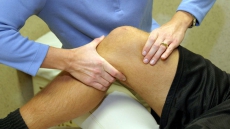
    Knee surgery not needed for mild osteoarthritis

    Knee surgery not needed for mild osteoarthritis
    Middle-aged and older patients with mild osteoarthritis of the knee may not benefit from the procedure of arthroscopic knee surgery, says new research....

    Knee surgery not needed for mild osteoarthritis