Monday, February 9, 2026
ADVT 
Health

Beware Pregers! Drinking Coke May Up Risk Of Obesity In Your Kid

IANS, 09 Jun, 2017 04:19 PM
    Beware would-be-mommies! A study has found that daily consumption of artificially-sweetened beverages during pregnancy could result your child being obese.
     
    Artificial sweeteners are widely replacing caloric sweeteners, due to the health concern related to sugar-sweetened beverages (SSBs) within the general population.
     
    The study looked to investigate the long-term impact of ASBs consumption on growth through age seven among children born to women with gestational diabetes.
     
    In particular, children born to women with gestational diabetes --the most common pregnancy complication affecting approximately 16 percent of pregnancies worldwide -- represent a high-risk phenotype, which may serve as a unique model to study the early origins of obesity.
     
    Further evidence has linked nutritional biological disruptions during pregnancy to fetal development and obesity risk in later life.
     
    The team investigated 918 mother and child pairs from the Danish National Birth Cohort. Enrolled participants completed four telephone interviews at gestational weeks 12 and 30, and six and 18 months postpartum, which collected data on socio-demographic, perinatal and clinical factors.
     
     
    In addition, maternal dietary intake was assessed by a food questionnaire during pregnancy.
     
    The child's body mass index scores and overweight/obesity status were calculated using weight and length/height at birth, five and 12 months and seven years.
     
    When the children were seven years old, a follow-up questionnaire about the child's health and development was delivered to the parents.
     
    The results showed that approximately half (45.4 percent) of women reported consuming artifically sweetened beverages during pregnancy, whereas 68.7 percent reported consuming SSBs.
     
    Consuming artifically sweetened beverages by pregnant women with gestational diabetes was associated with a 1.57 increased risk of being overweight for gestational age babies and a 1.93-fold increase in overweight/obesity risk at seven years after adjustment for major maternal and offspring risk factors.
     
    Substituting SSBs with artifically sweetened beverages was associated with an increased risk of offspring overweight/obesity at seven years whereas substitution of artifically sweetened beverage with water was associated with a 17 percent reduced risk.
     
    The findings illustrated a positive association between uterus exposure to artifically sweetened beverages and birth size and risk of overweight/obesity at 7 years.

    MORE Health ARTICLES

    UVic Develops Less-bloody Blood Test That Is Already In Use At Mayo Clinic

    UVic Develops Less-bloody Blood Test That Is Already In Use At Mayo Clinic
    VICTORIA — Forget the long, sharp needles and vials of blood taken to check for cancers, diabetes and heart problems — researchers at the University of Victoria have developed a new test requiring only a single drop.

    UVic Develops Less-bloody Blood Test That Is Already In Use At Mayo Clinic

    Canada Seeing Outbreaks Of Pertussis. Is Waning Immunity From Shots One Reason?

    Canada Seeing Outbreaks Of Pertussis. Is Waning Immunity From Shots One Reason?
    The bacterial infection, which often but not always causes a "whoop" sound when breathing or coughing, is particularly dangerous for very young babies, say doctors. The disease can lead to hospitalization and, in rare cases, death.

    Canada Seeing Outbreaks Of Pertussis. Is Waning Immunity From Shots One Reason?

    Machine Used In Cancer, Heart Disease Scans In Alberta Back Up And Running

    Machine Used In Cancer, Heart Disease Scans In Alberta Back Up And Running
    EDMONTON — A key piece of machinery in Alberta used in diagnostic tests such as cancer and heart disease is back up and running after a four-week shutdown.

    Machine Used In Cancer, Heart Disease Scans In Alberta Back Up And Running

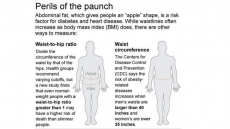
    Belt Getting Tighter? Study Finds A Pot Belly Risky Even If You're Not Considered Overweight

    Belt Getting Tighter? Study Finds A Pot Belly Risky Even If You're Not Considered Overweight
    New research suggests normal-weight people who carry their fat at their waistlines may be at higher risk of death over the years than overweight or obese people whose fat is more concentrated on the hips and thighs.

    Belt Getting Tighter? Study Finds A Pot Belly Risky Even If You're Not Considered Overweight

    How Low Should You Go? Details Revealed From Big Study That Challenges Blood Pressure Targets

    How Low Should You Go? Details Revealed From Big Study That Challenges Blood Pressure Targets
    Details were revealed Monday from a landmark federal study that challenges decades of thinking on blood pressure, giving a clearer picture of plusses and minuses of more aggressive treatment.

    How Low Should You Go? Details Revealed From Big Study That Challenges Blood Pressure Targets

    From Eyeballs To Hearts: Google Life Sciences, Heart Association, Team On New Research Venture

    From Eyeballs To Hearts: Google Life Sciences, Heart Association, Team On New Research Venture
    ORLANDO, Fla. — A company whose name is synonymous with eyeballs on the Internet is turning its attention to hearts.

    From Eyeballs To Hearts: Google Life Sciences, Heart Association, Team On New Research Venture