Monday, February 9, 2026
ADVT 
Health

Blocking immune cells may treat deadly skin cancer

Darpan News Desk IANS, 25 Sep, 2014 10:33 AM
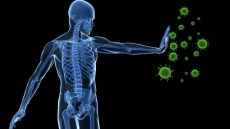
    Blocking a certain type of immune cells holds the key to treat melanoma - a deadly form of skin cancer, according to new research.
     
    British scientists have found that chemical signals produced by a type of immune cells, called macrophages, also act as a "survival signal" for melanoma cells.
     
    When researchers blocked the macrophages' ability to make this signal - called TNF alpha - melanoma tumours were much smaller and easier to treat.
     
    "This discovery shows that immune cells can actually help melanoma cells to survive," said Claudia Wellbrock, a cancer research scientist at University of Manchester and member of the Manchester Cancer Research Centre.
     
    During the treatment of patients, immune cells produce more of the survival signal which makes treatment less effective.
     
    "Combining standard treatment with immunotherapy could potentially provide long-lasting and effective treatments to increase survival," Wellbrock added.
     
    When melanoma patients are given chemotherapy or radiotherapy it causes inflammation, increasing the number of macrophages in the body - and raising the levels of TNF alpha.
     
    Drugs which block this "survival signal" have already been developed and using these along with standard treatment may be a promising new approach for melanoma patients, researchers concluded in the journal Cancer Discovery.

    MORE Health ARTICLES

    Autistic adults at higher risk of sexual victimisation: Study

    Autistic adults at higher risk of sexual victimisation: Study
    The lack of sexual knowledge in adults with autism puts them at a higher risk of sexual victimisation - sexual coercion, unwanted sexual contact attempted rape...

    Autistic adults at higher risk of sexual victimisation: Study

    Decoded: How Ebola virus disables immune response

    Decoded: How Ebola virus disables immune response
    Researchers have revealed how Ebola virus blocks and disables the body's natural immune response - paving the way for developing a drug to treat...

    Decoded: How Ebola virus disables immune response

    HIV vaccine a step closer

    HIV vaccine a step closer
     Researchers have uncovered new properties of special HIV antibodies called "broadly neutralising antibodies" or BNAbs, a discovery that could shed...

    HIV vaccine a step closer

    Computer to help spinal cord injury victims walk

    Computer to help spinal cord injury victims walk
    For helping people with spinal cord injury walk better, researchers have made an artificial connection from the brain to the locomotion centre in the...

    Computer to help spinal cord injury victims walk

    How immune system triggers psychological disorders

    How immune system triggers psychological disorders
    People with high levels of "inflammatory marker" proteins released into the blood in response to infection are at greater risk of developing depression and psychosis, says a study....

    How immune system triggers psychological disorders

    'Love hormone' helps autistic kids

    'Love hormone' helps autistic kids
    Researchers from Stanford University have found that oxytocin has a tremendous effect on such kids' ability to function socially....

    'Love hormone' helps autistic kids