Thursday, February 12, 2026
ADVT 
Health

Blocking immune cells may treat deadly skin cancer

Darpan News Desk IANS, 25 Sep, 2014 10:33 AM
    Blocking a certain type of immune cells holds the key to treat melanoma - a deadly form of skin cancer, according to new research.
     
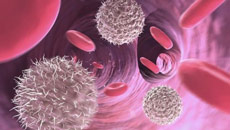
    British scientists have found that chemical signals produced by a type of immune cells, called macrophages, also act as a "survival signal" for melanoma cells.
     
    When researchers blocked the macrophages' ability to make this signal - called TNF alpha - melanoma tumours were much smaller and easier to treat.
     
    "This discovery shows that immune cells can actually help melanoma cells to survive," said Claudia Wellbrock, a cancer research scientist at University of Manchester and member of the Manchester Cancer Research Centre.
     
    During the treatment of patients, immune cells produce more of the survival signal which makes treatment less effective.
     
    "Combining standard treatment with immunotherapy could potentially provide long-lasting and effective treatments to increase survival," Wellbrock added.
     
    When melanoma patients are given chemotherapy or radiotherapy it causes inflammation, increasing the number of macrophages in the body - and raising the levels of TNF alpha.
     
    Drugs which block this "survival signal" have already been developed and using these along with standard treatment may be a promising new approach for melanoma patients, researchers concluded in the journal Cancer Discovery.

    MORE Health ARTICLES

    How your immune system can fight back cancer

    How your immune system can fight back cancer
    In a groundbreaking treatment, researchers at the National Cancer Institute in the US have harnessed a female patient's own immune system to fight cancer.

    How your immune system can fight back cancer

    Certainty on sea levels rise by 2030: Scientists

    Certainty on sea levels rise by 2030: Scientists
    The burning question whether sea level rise is accelerating can only be answered with a degree of certainty by 2030, an international team of scientists has claimed.

    Certainty on sea levels rise by 2030: Scientists

    Genes decide if medicine will work for you or not

    Genes decide if medicine will work for you or not
    Ever wondered why a particular medicine is effective for certain people but not for others? That is largely decided by genes, research reveals.

    Genes decide if medicine will work for you or not

    Ancient Egyptians were largely veggies

    Ancient Egyptians were largely veggies
    What exactly did people living along the banks of the Nile river thousands of years ago exactly eat? New research has unlocked the secret: Like most modern people, their diet was wheat and barley-based.

    Ancient Egyptians were largely veggies

    Meal shake: A drinkable meal on the go

    Meal shake: A drinkable meal on the go
    What if you can drink your meal instead of eating it? You would be left with no excuse to miss it, however busy you may be.

    Meal shake: A drinkable meal on the go

    How much sleep parents lose over a child? Eight years

    How much sleep parents lose over a child? Eight years
    Believe it or not, if you are a parent you will have over eight years worth of sleepless nights by the time your child turns 30, a British study has revealed.

    How much sleep parents lose over a child? Eight years