Friday, December 19, 2025
ADVT 
Health

Brain may produce nerve cells even after stroke

Darpan News Desk IANS, 12 Oct, 2014 11:13 AM
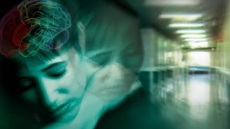
    Scientists have discovered a previously unknown mechanism through which the brain produces new nerve cells even after a stroke.
     
    Following an induced stroke in mice, brain support cells called astrocytes started to form nerve cells in the injured part of the brain.
     
    Using genetic methods to map the fate of the cells, the scientists demonstrated that astrocytes in the area formed immature nerve cells which then developed into mature nerve cells.
     
    "This is the first time that astrocytes have been shown to have the capacity to start a process that leads to the generation of new nerve cells after a stroke," said Zaal Kokaia, professor of experimental medical research at the Lund University in Sweden.
     
    A stroke is caused by a blood clot blocking a blood vessel in the brain, which leads to an interruption of blood flow and therefore a shortage of oxygen. 
     
    Many nerve cells die, resulting in motor, sensory and cognitive problems.
     
    During the study, scientists also identified the signalling mechanism that regulates the conversion of the astrocytes to nerve cells.
     
    In a healthy brain, this signalling mechanism is active and inhibits the conversion, and, consequently, the astrocytes do not generate nerve cells.
     
    Following a stroke, the signalling mechanism is suppressed and astrocytes start the process of generating new cells.
     
    "Interestingly, even when we blocked the signalling mechanism in mice not subjected to a stroke, the astrocytes formed new nerve cells," Kokaia added.
     
    "One of the major tasks now is to explore whether astrocytes are also converted to neurons in the human brain following damage or disease," said Olle Lindvall, senior professor of neurology at the Karolinska Institute in Sweden.
     
    The findings were published in the journal Science.
    MORE Health ARTICLES

    Impulsive behaviour linked to brain connectivity

    Impulsive behaviour linked to brain connectivity
    In what could help better understand behavioural problems and social adaptation difficulties in children, researchers have found that patterns of brain connectivity...

    Impulsive behaviour linked to brain connectivity

    Vitamin D deficiency increases schizophrenia risk

    Vitamin D deficiency increases schizophrenia risk
    Individuals with Vitamin D deficiency are twice as likely to be diagnosed with schizophrenia as compared to those who have sufficient levels of the...

    Vitamin D deficiency increases schizophrenia risk

    Cancer drug can detect HIV virus

    Cancer drug can detect HIV virus
    In a key discovery against HIV, researchers have shown that an anti-cancer drug can activate hidden HIV to levels readably detectable in the blood by...

    Cancer drug can detect HIV virus

    High salt ups heart disease risk in diabetics

    High salt ups heart disease risk in diabetics
    People with Type-2 diabetes have more to add to their list of dietary restrictions as researchers have found that a high salt diet may double their risk of developing...

    High salt ups heart disease risk in diabetics

    Indian scientists craft portable blood-disorder detection kit

    Indian scientists craft portable blood-disorder detection kit
    Harnessing the technology that powers new-age mobile phones, Indian scientists are set to develop a portable and affordable kit - a lab-on-a-chip - detection...

    Indian scientists craft portable blood-disorder detection kit

    Vaccine for dust-mite allergies

    Vaccine for dust-mite allergies
    If you are allergic to dust mites, here comes the help. Researchers have now developed a vaccine that can combat dust-mite allergies by switching on the...

    Vaccine for dust-mite allergies