Thursday, May 28, 2026
ADVT 
Health

Brain Scans Reveal Hidden Consciousness In Patients

The Canadian Press, 26 May, 2016 11:45 AM
    NEW YORK — A standard brain scanning technique is showing promise for helping doctors distinguish between patients in a vegetative state and those with hidden signs of consciousness.
     
    A study released Thursday is the latest to investigate using technology to help meet the challenge of making that distinction, which now is generally based on a doctor's bedside exam.
     
    Patients in a vegetative state have open eyes and show periods of sleep and wakefulness, but they are unaware of themselves or others and unable to think, respond or do anything on purpose. Patients in a minimally conscious state show only intermittent and minimal signs of awareness of themselves or their environment.
     
    Distinguishing between those two conditions is important because patients with even minimal awareness can be treated to help them communicate and to prevent suffering. They respond much better to stimulation from medication or sounds, touch, music and odours.
     
     
    In the new research, released by the journal Current Biology, researchers from Denmark, Belgium and Yale University investigated using so-called FDG-PET scans to measure the brain's consumption of blood sugar, which brain cells use as fuel. They sought to establish a specific level of consumption that could distinguish between the two groups of patients.
     
    They studied 49 vegetative patients and 65 minimally conscious ones, diagnosed by standard bedside procedures. They found that using a particular cutoff for PET scan results, they could correctly identify patient status 88 per cent of the time.
     
    The researchers checked the patient status again a year later. They found that 8 of the 11 vegetative patients who had scored above the cutoff, which had been associated with minimal consciousness, had in fact recovered consciousness. The other three had died.
     
    Three minimally conscious patients had scored below the cutoff. Of the two patients the researchers could find a record for, one showed no change and the other had died.
     
    Dr. Nicholas Schiff, a professor of neurology and neuroscience at the Weill Cornell Medical College in New York, who didn't participate in the work, called the work "very important." Such tests could encourage early diagnosis and promote proper care, he said.


    MORE Health ARTICLES

    Befriend a cyber buddy to stay motivated

    Befriend a cyber buddy to stay motivated
    Although a human partner is a better motivator during exercise, a software-generated cyber partner can also be effective in making you work a little extra, research reveals.

    Befriend a cyber buddy to stay motivated

    New method to treat cocaine addiction effectively

    New method to treat cocaine addiction effectively
    There is hardly any effective medications for cocaine addiction, but researchers have now discovered a new compound that can halt cocaine addiction, raising hope for new treatment for drug addicts.

    New method to treat cocaine addiction effectively

    How bariatric surgery can help control diabetes

    How bariatric surgery can help control diabetes
    That bariatric surgery, or obesity surgery, leads to weight loss is well known, but researchers have now identified the mechanism why obesity surgery also leave positive effects on diabetes and heart diseases.

    How bariatric surgery can help control diabetes

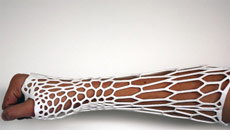
    Now, 3D-printed plaster cast to heal wound faster

    Now, 3D-printed plaster cast to heal wound faster
    In what could revolutionise plaster cast technology, a Turkish design student has unveiled a slick 3D-printed cast with ventilation holes that reduces healing time by around 40 percent than currently used plaster casts.

    Now, 3D-printed plaster cast to heal wound faster

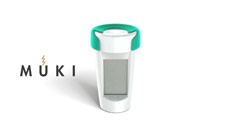
    Smart cup that delivers coffee, news too!

    Smart cup that delivers coffee, news too!
    Reading the morning newspaper while sipping a cup of coffee is set to become an even smoother experience as a Finnish coffee roastery company has developed a smart coffee cup that could also display an e-paper.

    Smart cup that delivers coffee, news too!

    An 'upside-down planet' discovered

    An 'upside-down planet' discovered
    Like so many interesting discoveries, this one happened largely by accident. An astronomer has discovered an ‘upside-down planet’ that reveals new method for studying binary star systems.

    An 'upside-down planet' discovered