Tuesday, February 10, 2026
ADVT 
Health

Breastfeeding May Not Protect All Kids From Obesity

Darpan News Desk IANS, 08 Apr, 2015 02:02 PM
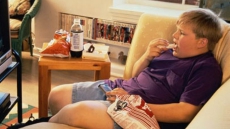
    While breastfeeding could be the best first food for a baby and provide numerous health benefits, it alone may not prevent all children from becoming obese, suggests a new study.
     
    Components in the milk of obese and lean mothers differ and therefore its safeguarding ability on offspring varies from woman to woman, said the researchers who reviewed relevant breastfeeding studies.
     
    "Recent studies show that factors such as whether a child's mother is obese, the quality of her milk and the socio-economic conditions a baby is born into also have an influence," Jessica Woo and Lisa Martin from the Cincinnati Children's Hospital Medical Center in the US.
     
    As obesity is notoriously difficult to treat, the research is increasingly geared towards preventive strategies. One such method is the advocacy of breastfeeding, as human milk contains all the nutrients and immunity support to help a baby develop optimally.
     
    The researchers noted that more than 80 observational studies done in the past 20 years all concluded that the odds of an infant who drank breast milk becoming obese is 12 to 24 percent less than for drinkers of formula milk. This protection increases the longer and the more exclusively someone was breastfed.
     
    But Woo and Martin suggest that there is more to the development of obese children than just the type of milk they consumed as babies.
     
    The review showed that biological researchers increasingly study the link between maternal obesity and severely overweight children.
     
    Human milk studies, work in probiotics, and research on the impact of maternal characteristics also highlight the protective value of having the right micro-organisms in the gut. Such micro-organisms seem to influence what and how much people eat, the researchers pointed out.
     
    They believe that educating mothers about healthy lifestyle habits could appreciably reduce obesity in children, and also increase the wellbeing of women.
     
    The review appeared in the Springer's journal Current Obesity Reports.
    MORE Health ARTICLES

    Obese kids' brains crave for sugar

    Obese kids' brains crave for sugar
    Overweight and obese children may feel much better by consuming food than their slimmer counterparts as researchers found that the brains of obese...

    Obese kids' brains crave for sugar

    Here's how personality decides your health

    Here's how personality decides your health
    How well your immune system can fight infection may depend on your personality, new research led by an Indian-origin scientist has found....

    Here's how personality decides your health

    Energy-efficient homes may trigger asthma

    Energy-efficient homes may trigger asthma
    "We have found that adults living in energy efficient social housing may have an increased risk of asthma," said researcher Richard Sharpe from...

    Energy-efficient homes may trigger asthma

    E-cigarettes less addictive than tobacco cigarettes: Study

    E-cigarettes less addictive than tobacco cigarettes: Study
    E-cigarettes are less addictive than tobacco cigarettes, finds a research, adding weight to the argument that vaping could help quit smoking....

    E-cigarettes less addictive than tobacco cigarettes: Study

    Flu vaccines boost immunity against many strains

    Flu vaccines boost immunity against many strains
    Researchers have found that seasonal flu vaccines protect individuals not only against the strains of flu they contain but also against many additional types....

    Flu vaccines boost immunity against many strains

    Top-selling eye vitamins in US not safe: Study

    Top-selling eye vitamins in US not safe: Study
    Researchers have found that claims made about top-selling eye vitamins in the US lack concrete scientific evidence and these supplements could pose a risk to users....

    Top-selling eye vitamins in US not safe: Study