Thursday, May 28, 2026
ADVT 
Health

Can Drinking 100% Fruit Juice Not Raise Diabetes Risk?

IANS, 19 Jan, 2018 12:21 PM
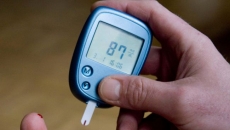
    Drinking 100 per cent fruit juice -- of apple, berry, citrus, grape and pomegranate -- does not significantly raise the risk of diabetes, a study has said.
     
    According to the study, published in the Journal of Nutritional Science, drinking 100 per cent fruit juice does not have a significant effect on fasting blood glucose, fasting blood insulin or insulin resistance -- markers of diabetes.
     
    For the study, the US-based Juice Products Association -- an industry trade group -- conducted systematic review and meta-analysis, which included 18 randomized controlled trials to evaluate the impact of 100 per cent juice from fruits on fasting blood glucose and fasting blood insulin levels.
     
    The findings are consistent with previous research indicating that 100 per cent fruit juice is not associated with an increased risk of developing Type 2 Diabetes, the researchers noted.
     
    However, a survey led by the British government earlier this year warned that fruit juice should be limited to a glass a day because of its high sugar content. 
     
    According to the "National Diet and Nutrition Survey" young people aged 11 to 19 are consuming, on an average, 47 per cent too much sugar from fruit juices, soft drinks, cereal bars, biscuits and cakes.
     
    "Fruit juice should only be drunk once a day and with a meal because it can be high in sugar," said Alison Tedstone, chief nutritionist at Public Health England, the government agency that released the survey.
     
    Another study, led by researchers from the Harvard University, showed that kids who drink fruit juices early in childhood are more likely to be diagnosed with asthma by age eight.
     
    The study, published in the journal Annals of the American Thoracic Society, also showed that women who drank more sugary drinks in their pregnancy are more likely to develop asthma. 

    MORE Health ARTICLES

    Bitter wild fruits can help treat cancer

    Bitter wild fruits can help treat cancer
    The compounds that give bitter flavour to wild cucurbits - cucumber, pumpkin, melon, watermelon and squash - have the potential to treat cancer and...

    Bitter wild fruits can help treat cancer

    Why autistic people see faces differently

    Why autistic people see faces differently
    People with autism spectrum disorder (ASD) gain different perceptions from peoples' faces as the way they gather information - not the judgement process itself ...

    Why autistic people see faces differently

    A breath test could identify onset of diabetes in kids

    A breath test could identify onset of diabetes in kids
     A sweet smell on the breath of your kids could have bitter health consequences as researchers have found that it could signal the onset of Type 1 diabetes....

    A breath test could identify onset of diabetes in kids

    'Recurrent cough and cold in children are signs of asthma'

    'Recurrent cough and cold in children are signs of asthma'
    Children with recurrent cough, cold and wheeze should visit their physician as these are clear symptoms that the child may be suffering from asthma, a medical...

    'Recurrent cough and cold in children are signs of asthma'

    'Good fat' could help manage diabetes

    'Good fat' could help manage diabetes
    Brown fat, nicknamed the ‘good fat’ because it warms up the body in cold temperatures, burning up calories in the process, could also be used to manage...

    'Good fat' could help manage diabetes

    Sleep apnea leads to poor aerobic fitness

    Sleep apnea leads to poor aerobic fitness
      People with sleep apnea, in which breathing repeatedly starts and stops during slumber, are likely to have reduced aerobic fitness, even compared with those....

    Sleep apnea leads to poor aerobic fitness