Friday, December 12, 2025
ADVT 
Health

Can Drinking 100% Fruit Juice Not Raise Diabetes Risk?

IANS, 19 Jan, 2018 12:21 PM
    Drinking 100 per cent fruit juice -- of apple, berry, citrus, grape and pomegranate -- does not significantly raise the risk of diabetes, a study has said.
     
    According to the study, published in the Journal of Nutritional Science, drinking 100 per cent fruit juice does not have a significant effect on fasting blood glucose, fasting blood insulin or insulin resistance -- markers of diabetes.
     
    For the study, the US-based Juice Products Association -- an industry trade group -- conducted systematic review and meta-analysis, which included 18 randomized controlled trials to evaluate the impact of 100 per cent juice from fruits on fasting blood glucose and fasting blood insulin levels.
     
    The findings are consistent with previous research indicating that 100 per cent fruit juice is not associated with an increased risk of developing Type 2 Diabetes, the researchers noted.
     
    However, a survey led by the British government earlier this year warned that fruit juice should be limited to a glass a day because of its high sugar content. 
     
    According to the "National Diet and Nutrition Survey" young people aged 11 to 19 are consuming, on an average, 47 per cent too much sugar from fruit juices, soft drinks, cereal bars, biscuits and cakes.
     
    "Fruit juice should only be drunk once a day and with a meal because it can be high in sugar," said Alison Tedstone, chief nutritionist at Public Health England, the government agency that released the survey.
     
    Another study, led by researchers from the Harvard University, showed that kids who drink fruit juices early in childhood are more likely to be diagnosed with asthma by age eight.
     
    The study, published in the journal Annals of the American Thoracic Society, also showed that women who drank more sugary drinks in their pregnancy are more likely to develop asthma. 

    MORE Health ARTICLES

    Coffee No Longer Deemed Possible Carcinogen

    Coffee No Longer Deemed Possible Carcinogen
    World Health Organization's research arm has downgraded its classification of coffee as a possible carcinogen, declaring there isn't enough proof to show a link to cancer.

    Coffee No Longer Deemed Possible Carcinogen

    Malaria-proof Mosquito? Tool Promising But Needs More Study

    Malaria-proof Mosquito? Tool Promising But Needs More Study
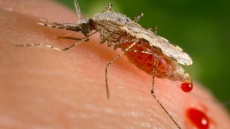
    WASHINGTON — A powerful new technology holds the promise of rapidly altering genes to make malaria-proof mosquitoes, eliminate their Zika-carrying cousins or wipe out an invasive species.

    Malaria-proof Mosquito? Tool Promising But Needs More Study

    Running Better Than Cycling For Long-term Bone Health

    Running Better Than Cycling For Long-term Bone Health
    Exercise that puts greater strain on bones, like running, may help in improving bone health more effectively than non-weight bearing activities like cycling, finds a new study.

    Running Better Than Cycling For Long-term Bone Health

    Every Cigarette Rots You, Inside Out

    Gory pictures on cigarette packets depicting the dangers of smoking have helped people kick the butt. But despite all the images of the diseased lungs and heart, the number of girls taking to the habit of smoking is on the rise.

    Every Cigarette Rots You, Inside Out

    Stress May Kill Sex In First-Time Parents

    Stress May Kill Sex In First-Time Parents
    The findings showed that 12 months after the baby was born, parents reported on their overall sexual satisfaction but mothers reported less sexual satisfaction. 

    Stress May Kill Sex In First-Time Parents

    Brain Scans Reveal Hidden Consciousness In Patients

    NEW YORK — A standard brain scanning technique is showing promise for helping doctors distinguish between patients in a vegetative state and those with hidden signs of consciousness.

    Brain Scans Reveal Hidden Consciousness In Patients