Thursday, April 2, 2026
ADVT 
Health

Can right brain rhythm create a super-perceiving human?

Darpan News Desk IANS, 25 Aug, 2014 08:31 AM
    A certain type of brainwave plays a key role in our sensitivity towards touch and driving. The right brain rhythm can make people have more perceptual and attentive powers, researchers say.
     
    By striking up the right rhythm in the right brain region at the right time, neuroscientists at Brown University managed to endow mice with greater touch sensitivity than other mice, making hard-to-perceive vibrations suddenly more vivid to them.
     
    The findings offer the first direct evidence that "gamma" brainwaves in the cortex affect perception and attention.
     
    "We found that under certain conditions, we can make a super-perceiving mouse," added Christopher Moore, an associate professor of neuroscience at Brown University.
     
    In lab experiments, Moore and the team used optogenetics " a technique of using light to control the firing patterns of neurons " to generate a gamma rhythm by manipulating inhibitory interneurons in the primary sensory neocortex of mice. That part of the brain controls a mouse's ability to detect faint sensations via its whiskers.
     
    Mice naturally produce a 40-hertz gamma rhythm in their sensory neocortex sometimes.
    Researchers optogenetically generated that gamma rhythm with precise pulses of blue light. The result was a mouse with whiskers that were about 20 percent more sensitive.
     
    "Mice with this rhythm could more often detect the fainter vibrations we supplied to their whiskers than mice who did not have the rhythm going in their brains," Moore explained.
     
    One of the key implications from the findings for neuroscience is that the way gamma rhythms appear to structure the processing of perception is more important than the mere firing rate of neurons in the sensory neocortex.
     
    "Mice became better able to feel not because neurons became more active but because they were entrained by a precisely timed rhythm," Moore concluded in a paper appeared in the journal Nature Neuroscience.


    MORE Health ARTICLES

    New method to treat cocaine addiction effectively

    New method to treat cocaine addiction effectively
    There is hardly any effective medications for cocaine addiction, but researchers have now discovered a new compound that can halt cocaine addiction, raising hope for new treatment for drug addicts.

    New method to treat cocaine addiction effectively

    How bariatric surgery can help control diabetes

    How bariatric surgery can help control diabetes
    That bariatric surgery, or obesity surgery, leads to weight loss is well known, but researchers have now identified the mechanism why obesity surgery also leave positive effects on diabetes and heart diseases.

    How bariatric surgery can help control diabetes

    Now, 3D-printed plaster cast to heal wound faster

    Now, 3D-printed plaster cast to heal wound faster
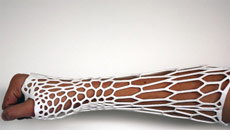
    In what could revolutionise plaster cast technology, a Turkish design student has unveiled a slick 3D-printed cast with ventilation holes that reduces healing time by around 40 percent than currently used plaster casts.

    Now, 3D-printed plaster cast to heal wound faster

    Smart cup that delivers coffee, news too!

    Smart cup that delivers coffee, news too!
    Reading the morning newspaper while sipping a cup of coffee is set to become an even smoother experience as a Finnish coffee roastery company has developed a smart coffee cup that could also display an e-paper.

    Smart cup that delivers coffee, news too!

    An 'upside-down planet' discovered

    An 'upside-down planet' discovered
    Like so many interesting discoveries, this one happened largely by accident. An astronomer has discovered an ‘upside-down planet’ that reveals new method for studying binary star systems.

    An 'upside-down planet' discovered

    Our ancestors enjoyed summer holidays at Antartica!

    Our ancestors enjoyed summer holidays at Antartica!
    If this information stands true, the history books have to be rewritten soon. According to scientists, some parts on the coldest region on our earth - Antartica - was as warm as today's California coast.

    Our ancestors enjoyed summer holidays at Antartica!