Thursday, February 5, 2026
ADVT 
Health

Canada To Do Clinical Trial Of Ebola Vaccine, Far Away From Ebola Researchers

The Canadian Press , 14 Nov, 2014 10:48 AM
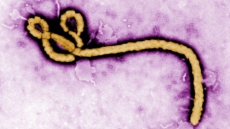
    TORONTO — A clinical trial of the made-in-Canada Ebola vaccine will be conducted in this country, Health Canada and the Public Health Agency of Canada announced Friday.
     
    The location of the trial — Halifax — comes as a serious disappointment to Ebola researchers at Canada's National Microbiology Laboratory in Winnipeg. At least some had been hoping to volunteer for the trial.
     
    "That's a bit of a sore point," a source familiar with the discussions said about the decision. The person spoke on condition of anonymity.
     
    The vaccine was developed at the Winnipeg lab. Scientists in the lab's Ebola research program have been waiting for years for a chance to be vaccinated with the product they helped to create, in the hopes it would protect them in their work.
     
    They had hoped the clinical trial would be conducted in Winnipeg. A clinical trial unit at a hospital in the city has done trials of a flu vaccine the Winnipeg lab is developing and researchers had hoped it could do the Ebola trial too.
     
    Other clinical trials involving the two Ebola vaccines currently being tested are being conducted in places where scientists and people who are involved in the Ebola response can volunteer. For instance, trials are being conducted in Geneva and Lausanne, Switzerland, specifically so that World Health Organization staff can take part.
     
    But the federal government has instead chosen a research team at Dalhousie University in Halifax, the Canadian Immunization Research Network.
     
    Researchers there are hoping to enrol 40 volunteers to test whether a low dose of the vaccine would be protective.
     
    This trial is one of several being conducted on the vaccine, which has been licensed to NewLink Genetics, a small biotech company in Ames, Iowa.
    MORE Health ARTICLES

    Canada pulling 3 member lab team back from Sierra Leone over Ebola fears

    Canada pulling 3 member lab team back from Sierra Leone over Ebola fears
    Canada is bringing three scientists home from Kailahun, Sierra Leone, a post which the World Health Organization has temporarily closed to investigate the infection of an international medical responder working there.

    Canada pulling 3 member lab team back from Sierra Leone over Ebola fears

    More kids at risk of developing diabetes from womb, says study

    More kids at risk of developing diabetes from womb, says study
    New research shows that children exposed to gestational diabetes in the wombs are nearly six times more likely to develop diabetes or prediabetes than children...

    More kids at risk of developing diabetes from womb, says study

    Low-dose aspirin reduces blood clot risk

    Low-dose aspirin reduces blood clot risk
    Low-dose aspirin can help prevent new blood clots among people who are at risk and have already suffered a blood clot, says a promising study....

    Low-dose aspirin reduces blood clot risk

    Knee surgery not needed for mild osteoarthritis

    Knee surgery not needed for mild osteoarthritis
    Middle-aged and older patients with mild osteoarthritis of the knee may not benefit from the procedure of arthroscopic knee surgery, says new research....

    Knee surgery not needed for mild osteoarthritis

    Eye changes can predict dementia

    Eye changes can predict dementia
    A loss of cells in the retina is one of the earliest signs of a form of dementia in people with a genetic risk for the brain disorder - even before any changes appear....

    Eye changes can predict dementia

    Canadian doctors have begun using stem cell transplants to treat 'Stiff Person Syndrome'

    Canadian doctors have begun using stem cell transplants to treat 'Stiff Person Syndrome'

    TORONTO - Canadian doctors have begun using stem cell transplants to treat "stiff person syn...

    Canadian doctors have begun using stem cell transplants to treat 'Stiff Person Syndrome'