Sunday, December 21, 2025
ADVT 
Health

Cancer detection made simpler with 'virtual breast'

Darpan News Desk IANS, 01 Oct, 2014 10:11 AM
    To help clinicians better interpret the results of a cancer detection test - ultrasound elastography, researchers have developed what they call a "virtual breast".
     
    Like a simulator used to train fledgling surgeons, the virtual breast - a 3D, computer generated phantom - could let medical professionals practice ultrasound elastography in the safety of the laboratory.
     
    As only a minority of suspicious mammograms actually lead to a cancer diagnosis, the researchers said ultrasound elastography can be used to pinpoint possible tumours throughout the body, including the breast.
     
    "Ultrasound elastography could be an excellent screening tool for women who have suspicious mammograms, but only if the results are properly interpreted," the study said.
     
    "It uses imaging to measure the stiffness of tissue and cancer tissues are stiff," said Jingfeng Jiang, a biomedical engineer at the Michigan Technological University, US.
     
    While some of those images can be breathtakingly clear, others are not that precise.
     
    "Depending on who does the reading, the accuracy can vary from 95 percent to 40 percent," Jiang added.
     
    As practice could improve better interpretation the results, the researchers developed the virtual breast using data from the Visible Human Project, which gathered thousands of cross-sectional photos from a female cadaver.
     
    It mimics the intricacy of the real thing, incorporating a variety of tissue types and anatomical structures, such as ligaments and milk ducts.
     
    Clinicians can practice looking for cancer by applying virtual ultrasound elastography to the virtual breast and then evaluating the resulting images, the researchers stressed.
    MORE Health ARTICLES

    Autism risk higher among kids with parents in technical jobs

    Autism risk higher among kids with parents in technical jobs
    Children of parents who are in technical occupations are more likely to have an autism spectrum disorder (ASD) and a more serious form of autism, a study suggested.

    Autism risk higher among kids with parents in technical jobs

    Antarctic ice sheet collapse has begun, shows research

    Antarctic ice sheet collapse has begun, shows research
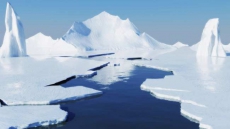
    In an alarming find, scientists have discovered that the collapse of West Antarctic ice sheet - that holds enough water to raise global seas by several feet - has already begun.

    Antarctic ice sheet collapse has begun, shows research

    Now, a virtual pet to help obese kids lose weight

    Now, a virtual pet to help obese kids lose weight
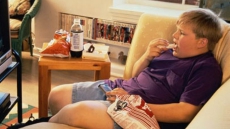
    If your kids are gaining weight because they spend more time indoor playing video games instead of playing outdoor, you may soon turn technology on its head - all thanks to a virtual pet designed to induce kids to physical activities.

    Now, a virtual pet to help obese kids lose weight

    Eldest among siblings? Check if you are more conservative

    Eldest among siblings? Check if you are more conservative
    If you are the eldest among all your siblings, chances are that you would be averse to change and prefer conformity than those who follow you in the family, a study said.

    Eldest among siblings? Check if you are more conservative

    State Goes Missing in Healthcare in India; 70 Percent is Private

    State Goes Missing in Healthcare in India; 70 Percent is Private
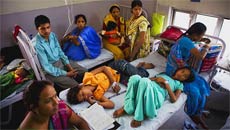
    More than 70 percent of healthcare in India is provided by corporate houses as a result of which poor people are not able to afford the high cost of medical care provided by private hospitals, health experts have said.

    State Goes Missing in Healthcare in India; 70 Percent is Private

    Canadians top drinkers, Indians not far behind: WHO

    Canadians top drinkers, Indians not far behind: WHO
    In a latest survey released by the WHO, Canadians are drinking more alcohol than most of the rest of the world - followed by Americans

    Canadians top drinkers, Indians not far behind: WHO