Sunday, December 21, 2025
ADVT 
Health

Cancer detection made simpler with 'virtual breast'

Darpan News Desk IANS, 01 Oct, 2014 10:11 AM
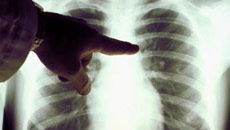
    To help clinicians better interpret the results of a cancer detection test - ultrasound elastography, researchers have developed what they call a "virtual breast".
     
    Like a simulator used to train fledgling surgeons, the virtual breast - a 3D, computer generated phantom - could let medical professionals practice ultrasound elastography in the safety of the laboratory.
     
    As only a minority of suspicious mammograms actually lead to a cancer diagnosis, the researchers said ultrasound elastography can be used to pinpoint possible tumours throughout the body, including the breast.
     
    "Ultrasound elastography could be an excellent screening tool for women who have suspicious mammograms, but only if the results are properly interpreted," the study said.
     
    "It uses imaging to measure the stiffness of tissue and cancer tissues are stiff," said Jingfeng Jiang, a biomedical engineer at the Michigan Technological University, US.
     
    While some of those images can be breathtakingly clear, others are not that precise.
     
    "Depending on who does the reading, the accuracy can vary from 95 percent to 40 percent," Jiang added.
     
    As practice could improve better interpretation the results, the researchers developed the virtual breast using data from the Visible Human Project, which gathered thousands of cross-sectional photos from a female cadaver.
     
    It mimics the intricacy of the real thing, incorporating a variety of tissue types and anatomical structures, such as ligaments and milk ducts.
     
    Clinicians can practice looking for cancer by applying virtual ultrasound elastography to the virtual breast and then evaluating the resulting images, the researchers stressed.

    MORE Health ARTICLES

    What you were waiting for! A device that detects pee in pool

    What you were waiting for! A device that detects pee in pool
    Those who have a habit of peeing in a swimming pool, beware. Here comes a device glows green the moment it detects traces of human waste in water.

    What you were waiting for! A device that detects pee in pool

    Do humans have spiders' genes?

    Do humans have spiders' genes?
    Not only the spiderman, even you may share certain genomic similarities with spiders, a study that for the first time sequenced the genome of a spider has revealed.

    Do humans have spiders' genes?

    Anger a better motivator for volunteers than sympathy?

    Anger a better motivator for volunteers than sympathy?
    Angry people do not always raise a ruckus; they may also bring about positive changes to society with a new study showing that anger may be more effective at motivating people to volunteer than other motives.

    Anger a better motivator for volunteers than sympathy?

    Impulsive people at greater risk of food addiction

    Impulsive people at greater risk of food addiction
    Impulsive people are at greater risks of food and drug addition as impulsivity is a result of cellular activities in the part of the brain involved with reward and not a result of dysfunctional eating behaviour, a study indicated.

    Impulsive people at greater risk of food addiction

    'Lung disease linked to diabetes under-diagnosed in India'

    'Lung disease linked to diabetes under-diagnosed in India'
    An infectious lung disease - melioidosis - which is linked to diabetics is grossly under-diagnosed in India, according to a British expert.

    'Lung disease linked to diabetes under-diagnosed in India'

    Keep it going! Yawn can cool your brain

    Keep it going! Yawn can cool your brain
    It may look unpleasant in office meeting or in the middle of a social dinner but yawning does help cool your brain.

    Keep it going! Yawn can cool your brain