Saturday, April 4, 2026
ADVT 
Health

Cancer detection made simpler with 'virtual breast'

Darpan News Desk IANS, 01 Oct, 2014 10:11 AM
    To help clinicians better interpret the results of a cancer detection test - ultrasound elastography, researchers have developed what they call a "virtual breast".
     
    Like a simulator used to train fledgling surgeons, the virtual breast - a 3D, computer generated phantom - could let medical professionals practice ultrasound elastography in the safety of the laboratory.
     
    As only a minority of suspicious mammograms actually lead to a cancer diagnosis, the researchers said ultrasound elastography can be used to pinpoint possible tumours throughout the body, including the breast.
     
    "Ultrasound elastography could be an excellent screening tool for women who have suspicious mammograms, but only if the results are properly interpreted," the study said.
     
    "It uses imaging to measure the stiffness of tissue and cancer tissues are stiff," said Jingfeng Jiang, a biomedical engineer at the Michigan Technological University, US.
     
    While some of those images can be breathtakingly clear, others are not that precise.
     
    "Depending on who does the reading, the accuracy can vary from 95 percent to 40 percent," Jiang added.
     
    As practice could improve better interpretation the results, the researchers developed the virtual breast using data from the Visible Human Project, which gathered thousands of cross-sectional photos from a female cadaver.
     
    It mimics the intricacy of the real thing, incorporating a variety of tissue types and anatomical structures, such as ligaments and milk ducts.
     
    Clinicians can practice looking for cancer by applying virtual ultrasound elastography to the virtual breast and then evaluating the resulting images, the researchers stressed.
    MORE Health ARTICLES

    Fly's genome study offers hope for sleeping sickness

    Fly's genome study offers hope for sleeping sickness
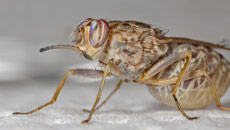
    With genome decoding of tsetse fly that causes the potentially fatal sleeping sickness disease, scientists have discovered new clues to the diet, vision and reproductive strategies of the insect.

    Fly's genome study offers hope for sleeping sickness

    Technology to catch dozing drivers on the go

    Technology to catch dozing drivers on the go
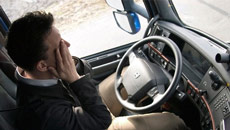
    Long rides at night can now become a lot more pleasant and safe if you listen to researchers who have developed an inexpensive and easier way to find out when the person behind the wheel is about to nod off.

    Technology to catch dozing drivers on the go

    Astronauts may face attention deficit risks

    Astronauts may face attention deficit risks
    Astronauts who are radiation-sensitive need to take extra care to protect their brains as they may face risks of attention deficit and slower reaction times, a study suggests.

    Astronauts may face attention deficit risks

    Befriend a cyber buddy to stay motivated

    Befriend a cyber buddy to stay motivated
    Although a human partner is a better motivator during exercise, a software-generated cyber partner can also be effective in making you work a little extra, research reveals.

    Befriend a cyber buddy to stay motivated

    New method to treat cocaine addiction effectively

    New method to treat cocaine addiction effectively
    There is hardly any effective medications for cocaine addiction, but researchers have now discovered a new compound that can halt cocaine addiction, raising hope for new treatment for drug addicts.

    New method to treat cocaine addiction effectively

    How bariatric surgery can help control diabetes

    How bariatric surgery can help control diabetes
    That bariatric surgery, or obesity surgery, leads to weight loss is well known, but researchers have now identified the mechanism why obesity surgery also leave positive effects on diabetes and heart diseases.

    How bariatric surgery can help control diabetes