Tuesday, July 7, 2026
ADVT 
Health

Cancer grows and spreads at night

Darpan News Desk IANS, 07 Oct, 2014 10:46 AM


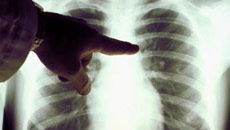
    Cancer grows and spreads in the body at night, shows a study, suggesting that it could be more efficient to administer certain anti-cancer drugs at night.
     
    A hormone, generally referred to as stress hormone that keeps us alert, also suppresses the spread of cancer receptors, the findings showed.
     
    “Cancer treatments are often administered in the daytime, just when the patient's body is suppressing the spread of the cancer on its own,” said co-researcher Yosef Yarden from Weizmann Institute of Science in Israel.
     
    “What we propose is not a new treatment, but rather a new treatment schedule for some of the current drugs,” Yarden added.
     
    This finding arose out of an investigation into the relationships between different receptors in the cell.
     
    The receptors - protein molecules on the cell's surface or within cells - take in biochemical messages secreted by other cells and pass them on into the cell's interior. 
     
    The scientists focused on two particular receptors. 
     
    The first, the epidermal growth factor receptor, EGFR, promotes the growth and migration of cells, including cancer cells. 
     
    The second binds to a steroid hormone called a glucocorticoid (GC). 
     
    Glucocorticoids play a role in maintaining the body's energy levels during the day, as well as the metabolic exchange of materials. 
     
    Cell migration - the activity promoted by the EGF receptor - is much more active during sleep and quiescent during waking hours, the study conducted in mice showed.
     
    The findings were published in the journal Nature Communications.

    MORE Health ARTICLES

    What you were waiting for! A device that detects pee in pool

    What you were waiting for! A device that detects pee in pool
    Those who have a habit of peeing in a swimming pool, beware. Here comes a device glows green the moment it detects traces of human waste in water.

    What you were waiting for! A device that detects pee in pool

    Do humans have spiders' genes?

    Do humans have spiders' genes?
    Not only the spiderman, even you may share certain genomic similarities with spiders, a study that for the first time sequenced the genome of a spider has revealed.

    Do humans have spiders' genes?

    Anger a better motivator for volunteers than sympathy?

    Anger a better motivator for volunteers than sympathy?
    Angry people do not always raise a ruckus; they may also bring about positive changes to society with a new study showing that anger may be more effective at motivating people to volunteer than other motives.

    Anger a better motivator for volunteers than sympathy?

    Impulsive people at greater risk of food addiction

    Impulsive people at greater risk of food addiction
    Impulsive people are at greater risks of food and drug addition as impulsivity is a result of cellular activities in the part of the brain involved with reward and not a result of dysfunctional eating behaviour, a study indicated.

    Impulsive people at greater risk of food addiction

    'Lung disease linked to diabetes under-diagnosed in India'

    'Lung disease linked to diabetes under-diagnosed in India'
    An infectious lung disease - melioidosis - which is linked to diabetics is grossly under-diagnosed in India, according to a British expert.

    'Lung disease linked to diabetes under-diagnosed in India'

    Keep it going! Yawn can cool your brain

    Keep it going! Yawn can cool your brain
    It may look unpleasant in office meeting or in the middle of a social dinner but yawning does help cool your brain.

    Keep it going! Yawn can cool your brain