Sunday, June 7, 2026
ADVT 
Health

Cheap, Portable Biosensor Developed By Indian-American To Keep Tab On Alzheimer's Progress

IANS, 14 Mar, 2016 11:07 AM
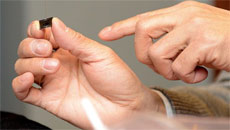
    A team of researchers led by an Indian-American scientist has developed a portable biosensor that can display the progress of Alzheimer's disease in a patient.
     
    A test on the cheap and simple biosensor can measure the level of protein called beta-amyloid -- increased level of which leads to the degeneration of brain cells and causes Alzheimer's -- in the blood at tiny concentrations in just half an hour.
     
    "We want to develop a point of care system, where a small drop of blood plasma can reveal their beta-amyloid level immediately so that a doctor can tailor a patient's therapy immediately," said lead author Ajeet Kaushik from the University of Florida in the US. 
     
    The protein, which is found in lower levels in blood, makes it a useful biomarker to diagnose and monitor the disease progression.
     
    A quick test on the biosensor can reveal a clinician to collect accurate information on the progression of disease and see what is happening to a patient over time. 
     
    It will also show if and when the disease reaches an untreatable level, the authors reported in the study published in the journal Biosensors and Bioelectronics.
     
    The researchers pointed out that the affordable test can be useful in both developed countries and rural settings. Also with the right data, doctors can respond quickly to changes in a patient's brain by reducing or increasing their dose of drugs.


    MORE Health ARTICLES

    Prostate cancer linked with sex: Study

    Prostate cancer linked with sex: Study
    A study in the US has found that prostate cancer could be caused by a common infection passed on during intercourse, a leading English daily reported Tuesday.

    Prostate cancer linked with sex: Study

    Don't drink and swim: Drunk zebrafish shows why humans go nuts after booze

    Don't drink and swim: Drunk zebrafish shows why humans go nuts after booze
    High on booze, a zebrafish nearly doubled her speed in an experiment, leaving scientists with results that may help them find why some people on a high behave like weirdos in a party.

    Don't drink and swim: Drunk zebrafish shows why humans go nuts after booze

    E-cigarettes boost drug-resistant bacteria

    E-cigarettes boost drug-resistant bacteria
    Despite being labeled as a healthy alternative to cigarettes, e-cigarettes may increase the virulence of drug-resistant and potentially life-threatening bacteria, a study has warned.

    E-cigarettes boost drug-resistant bacteria

    Chip that precisely detects cancer early created

    Chip that precisely detects cancer early created
    What if we could diagnose cancer while it was still only affecting a few localised cells? Here comes an ultra-sensitive nano-chip that is capable of detecting cancer early.

    Chip that precisely detects cancer early created

    Yoga gets a new home in Finland

    Yoga gets a new home in Finland
    Yoga is set to get a new home in Finland when a studio is opened at the airport of this capital of the Nordic country.

    Yoga gets a new home in Finland

    Prehistoric skeleton confirms first American origins

    Prehistoric skeleton confirms first American origins
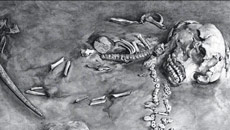
    Researchers said Thursday that they have identified a nearly complete skeleton in an underwater Mexican cave, a discovery that could help resolve a longstanding debate about the origins of the first people to inhabit the Americas.

    Prehistoric skeleton confirms first American origins