Monday, December 29, 2025
ADVT 
Health

Chili Pepper Ingredient Could Prevent Weight Gain

Darpan News Desk IANS, 09 Feb, 2015 12:06 PM
    There is good news for those who find it hard to resist fatty foods. An ingredient found in chili peppers could help you prevent weight gain after eating a high-fat diet, a study involving an Indian-origin researcher has found.
     
    As capsaicin -- the chief ingredient in chili peppers - stimulates energy burning, a dietary supplement could be developed to do away with restriction in calorie intake, the findings suggest.
     
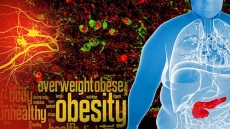
    "Our group's laboratory data revealed that dietary capsaicin suppresses high-fat-diet-induced obesity," explained Vivek Krishnan, a graduate student from the University of Wyoming in the US.
     
    "In our bodies, white fat cells store energy and brown fat cells serve as thermogenic (heat produced by burning fat) machinery to burn stored fat. Eating calorie-rich food and a lack of physical activity cause an imbalance in metabolism that leads to obesity," Krishnan explained.
     
    The researchers found that dietary capsaicin -- 0.01 percent of capsaicin in the total high fat diet -- prevented high-fat-diet-induced weight gain in trials with wild type mice.
     
    Dietary capsaicin may induce browning of white adipose tissue and stimulates thermogenesis to counteract obesity, the researchers noted.
     
    Developing a natural dietary supplement as a strategy to combat obesity can be easily advanced to human clinical trials.
     
    "We envision a nanoparticle-based sustained-release formulation of capsaicin, which is currently under development in our laboratory," the researchers added.
     
    "In turn, this will advance a novel dietary supplement-based approach to prevent and treat one of the life-threatening diseases, obesity and its associated complications -- in humans," they noted.
     
    The findings were presented at Biophysical Society's 59th annual meeting in Baltimore, Maryland.

    MORE Health ARTICLES

    Artificial anti-cancer molecules created in a jiffy

    Artificial anti-cancer molecules created in a jiffy
    In what could lead to new anti-cancer drugs, researchers have developed a new method to produce molecules that have a similar structure to peptides...

    Artificial anti-cancer molecules created in a jiffy

    Neuronal 'sweet spot' can curb obesity

    Neuronal 'sweet spot' can curb obesity
    Preventing weight gain, obesity and diabetes could be as simple as keeping a nuclear receptor from being activated in a small part of the brain, says a new study....

    Neuronal 'sweet spot' can curb obesity

    First molecular map to detect vision loss created

    First molecular map to detect vision loss created
    An Indian-origin researcher-led team has created the most detailed map to date of a region of the human eye, long associated with blinding diseases...

    First molecular map to detect vision loss created

    Revealed: Why brain tumours are more common in men

    Revealed: Why brain tumours are more common in men
    The absence of a protein known to reduce cancer risk can explain why brain tumours occur more often in males and are more harmful than similar tumours in females....

    Revealed: Why brain tumours are more common in men

    In-flight infants at greater death risk: Study

    In-flight infants at greater death risk: Study
    If we believe a shocking in-flight pattern revealed by researchers, lap infants are at greater risk of dying on board owing to bad sleeping arrangements....

    In-flight infants at greater death risk: Study

    Herbal anti-malaria drug may control asthma

    Herbal anti-malaria drug may control asthma
    According to researchers from National University of Singapore (NUS), the "artesunate" herbal drug can herald better treatment outcomes than other...

    Herbal anti-malaria drug may control asthma