Tuesday, December 30, 2025
ADVT 
Health

Common antibacterial in soap may harm liver

Darpan News Desk IANS, 18 Nov, 2014 11:37 AM
    Long-term exposure to triclosan, found in soaps, shampoos, toothpastes and many other household items, may cause liver fibrosis and cancer, an alarming study suggests.
     
    "Triclosan's increasing detection in environmental samples and its increasingly broad use in consumer products may overcome its moderate benefit and present a very real risk of liver toxicity for people, as it does in mice," said Robert Tukey, professor at University of California, San Diego School of Medicine.
     
    The risk is particularly high when triclosan is combined with other compounds with similar action, Tukey noted.
     
    The researchers found that triclosan disrupted liver integrity and compromised liver function in mouse models.
     
    Mice exposed to triclosan for six months (roughly equivalent to 18 human years) were more susceptible to chemical-induced liver tumours. Their tumours were also larger and more frequent than in mice not exposed to triclosan.
     
    The study suggests triclosan may do its damage by interfering with the constitutive androstane receptor, a protein responsible for detoxifying (clearing away) foreign chemicals in the body.
     
    To compensate for this stress, liver cells proliferate and turn fibrotic over time. Repeated triclosan exposure and continued liver fibrosis eventually promote tumour formation.
     
    Triclosan is perhaps the most ubiquitous consumer antibacterial. Studies have found traces in 97 percent of breast milk samples from lactating women and in the urine of nearly 75 percent of people tested.
     
    The study appeared in the journal Proceedings of the National Academy of Sciences.

    MORE Health ARTICLES

    'Love hormone' bonds animals like humans

    'Love hormone' bonds animals like humans
    And you thought you had a patent on 'love hormone' when it comes to showing affection! Dogs too have oxytocin and release it in a good quantity when in love or looking for bonding.

    'Love hormone' bonds animals like humans

    Can you believe it? Metabolism existed even before origin of life, reveales study

    Can you believe it? Metabolism existed even before origin of life, reveales study
    The mystery behind how the first organisms on earth could have become metabolically active has been unlocked.

    Can you believe it? Metabolism existed even before origin of life, reveales study

    Fly's genome study offers hope for sleeping sickness

    Fly's genome study offers hope for sleeping sickness
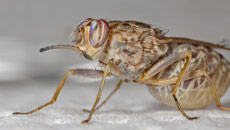
    With genome decoding of tsetse fly that causes the potentially fatal sleeping sickness disease, scientists have discovered new clues to the diet, vision and reproductive strategies of the insect.

    Fly's genome study offers hope for sleeping sickness

    Technology to catch dozing drivers on the go

    Technology to catch dozing drivers on the go
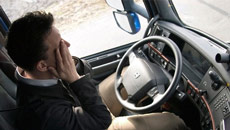
    Long rides at night can now become a lot more pleasant and safe if you listen to researchers who have developed an inexpensive and easier way to find out when the person behind the wheel is about to nod off.

    Technology to catch dozing drivers on the go

    Astronauts may face attention deficit risks

    Astronauts may face attention deficit risks
    Astronauts who are radiation-sensitive need to take extra care to protect their brains as they may face risks of attention deficit and slower reaction times, a study suggests.

    Astronauts may face attention deficit risks

    Befriend a cyber buddy to stay motivated

    Befriend a cyber buddy to stay motivated
    Although a human partner is a better motivator during exercise, a software-generated cyber partner can also be effective in making you work a little extra, research reveals.

    Befriend a cyber buddy to stay motivated