Saturday, December 27, 2025
ADVT 
Health

Common antibacterial in soap may harm liver

Darpan News Desk IANS, 18 Nov, 2014 11:37 AM
    Long-term exposure to triclosan, found in soaps, shampoos, toothpastes and many other household items, may cause liver fibrosis and cancer, an alarming study suggests.
     
    "Triclosan's increasing detection in environmental samples and its increasingly broad use in consumer products may overcome its moderate benefit and present a very real risk of liver toxicity for people, as it does in mice," said Robert Tukey, professor at University of California, San Diego School of Medicine.
     
    The risk is particularly high when triclosan is combined with other compounds with similar action, Tukey noted.
     
    The researchers found that triclosan disrupted liver integrity and compromised liver function in mouse models.
     
    Mice exposed to triclosan for six months (roughly equivalent to 18 human years) were more susceptible to chemical-induced liver tumours. Their tumours were also larger and more frequent than in mice not exposed to triclosan.
     
    The study suggests triclosan may do its damage by interfering with the constitutive androstane receptor, a protein responsible for detoxifying (clearing away) foreign chemicals in the body.
     
    To compensate for this stress, liver cells proliferate and turn fibrotic over time. Repeated triclosan exposure and continued liver fibrosis eventually promote tumour formation.
     
    Triclosan is perhaps the most ubiquitous consumer antibacterial. Studies have found traces in 97 percent of breast milk samples from lactating women and in the urine of nearly 75 percent of people tested.
     
    The study appeared in the journal Proceedings of the National Academy of Sciences.
    MORE Health ARTICLES

    New technique can reduce high BP without drugs

    New technique can reduce high BP without drugs
    A new technique called mindfulness-based stress reduction (MBSR) can help people suffering from hypertension...

    New technique can reduce high BP without drugs

    Hand-held device can detect deadly skin cancer

    Hand-held device can detect deadly skin cancer
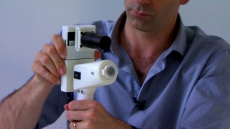
    A new hand-held device that uses lasers and sound waves may change the way doctors treat and diagnose the deadly skin cancer melanoma, says new research....

    Hand-held device can detect deadly skin cancer

    Human milk crucial for critically ill infants

    Human milk crucial for critically ill infants
    Human milk is infant food but for critically ill babies, it can also work as a medicine, says a promising research....

    Human milk crucial for critically ill infants

    Vitamin D deficiency doubles dementia, Alzeimer's risk

    Vitamin D deficiency doubles dementia, Alzeimer's risk
    In older people, not getting enough vitamin D may double the risk of developing dementia and Alzheimer's disease, says a study....

    Vitamin D deficiency doubles dementia, Alzeimer's risk

    Diabetic? Eat pistachios daily for super health

    Diabetic? Eat pistachios daily for super health
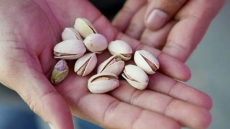
    Love pistachios? You have another reason to have these tree nuts if your sugar levels are high as eating pistachios may reduce vascular response to stress in type 2 diabetes....

    Diabetic? Eat pistachios daily for super health

    Aspirin may prevent cancer in elderly

    Aspirin may prevent cancer in elderly
    Taking aspirin can significantly reduce the risk of developing - and dying from cancers of the digestive tract, new research has found....

    Aspirin may prevent cancer in elderly