Monday, December 29, 2025
ADVT 
Health

Common antibacterial in soap may harm liver

Darpan News Desk IANS, 18 Nov, 2014 11:37 AM
    Long-term exposure to triclosan, found in soaps, shampoos, toothpastes and many other household items, may cause liver fibrosis and cancer, an alarming study suggests.
     
    "Triclosan's increasing detection in environmental samples and its increasingly broad use in consumer products may overcome its moderate benefit and present a very real risk of liver toxicity for people, as it does in mice," said Robert Tukey, professor at University of California, San Diego School of Medicine.
     
    The risk is particularly high when triclosan is combined with other compounds with similar action, Tukey noted.
     
    The researchers found that triclosan disrupted liver integrity and compromised liver function in mouse models.
     
    Mice exposed to triclosan for six months (roughly equivalent to 18 human years) were more susceptible to chemical-induced liver tumours. Their tumours were also larger and more frequent than in mice not exposed to triclosan.
     
    The study suggests triclosan may do its damage by interfering with the constitutive androstane receptor, a protein responsible for detoxifying (clearing away) foreign chemicals in the body.
     
    To compensate for this stress, liver cells proliferate and turn fibrotic over time. Repeated triclosan exposure and continued liver fibrosis eventually promote tumour formation.
     
    Triclosan is perhaps the most ubiquitous consumer antibacterial. Studies have found traces in 97 percent of breast milk samples from lactating women and in the urine of nearly 75 percent of people tested.
     
    The study appeared in the journal Proceedings of the National Academy of Sciences.
    MORE Health ARTICLES

    Scientists rewrite code of life with 'alien' DNA

    Scientists rewrite code of life with 'alien' DNA
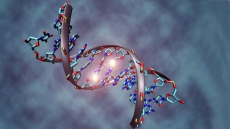
    In a major breakthrough that could re-write the history of life on earth, scientists have successfully added an alien pair of DNA "letters" (or bases) to create the first "semi-synthetic" bacterium.

    Scientists rewrite code of life with 'alien' DNA

    Now, a DNA tool to spot cancer

    Now, a DNA tool to spot cancer
    Detecting cancer could soon become a lot easier as scientists have used DNA to develop a tool that detects and reacts to chemical changes caused by cancer cells.

    Now, a DNA tool to spot cancer

    What you were waiting for! A device that detects pee in pool

    What you were waiting for! A device that detects pee in pool
    Those who have a habit of peeing in a swimming pool, beware. Here comes a device glows green the moment it detects traces of human waste in water.

    What you were waiting for! A device that detects pee in pool

    Do humans have spiders' genes?

    Do humans have spiders' genes?
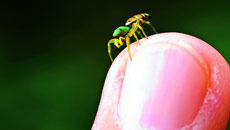
    Not only the spiderman, even you may share certain genomic similarities with spiders, a study that for the first time sequenced the genome of a spider has revealed.

    Do humans have spiders' genes?

    Anger a better motivator for volunteers than sympathy?

    Anger a better motivator for volunteers than sympathy?
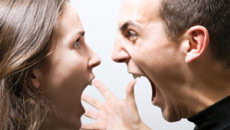
    Angry people do not always raise a ruckus; they may also bring about positive changes to society with a new study showing that anger may be more effective at motivating people to volunteer than other motives.

    Anger a better motivator for volunteers than sympathy?

    Impulsive people at greater risk of food addiction

    Impulsive people at greater risk of food addiction
    Impulsive people are at greater risks of food and drug addition as impulsivity is a result of cellular activities in the part of the brain involved with reward and not a result of dysfunctional eating behaviour, a study indicated.

    Impulsive people at greater risk of food addiction