Wednesday, December 24, 2025
ADVT 
Health

Computer to help spinal cord injury victims walk

Darpan News Desk IANS, 14 Aug, 2014 08:18 AM
    For helping people with spinal cord injury walk better, researchers have made an artificial connection from the brain to the locomotion centre in the spinal cord using a computer interface as bypass.
     
    This allowed participants to stimulate the spinal locomotion centre using volitionally-controlled muscle activity and to control walking.
     
    Neural networks in the spinal cord, locomotion centre are capable of producing rhythmic movements such as swimming and walking, even when isolated from the brain.
     
    The brain sends commands to the spinal locomotion centre to start, stop and change walking speed.
     
    In most cases of spinal cord injury, the loss of this link from the brain to the locomotion centre causes problems with walking.
     
    "We hope this technology would compensate for the interrupted pathways' function by sending an encoded command to the preserved spinal locomotor centre and regain volitionally-controlled walking in individuals with paraplegia," explained Yukio Nishimura, an associate professor of the Okazaki-based National Institute for Physiological Sciences (NIPS).
     
    Since the arm movements are associated with leg movements when we walk, they used muscle activity of arm to surrogate the brain activity.
     
    In the study, the computer interface allowed subjects to control magnetic stimulator that drive to the spinal locomotion centre using volitionally-controlled muscle activity and to control walking in legs.
     
    However, without bypassing with the computer interface the legs did not move even if the arm's muscles were volitionally activated.
     
    The results were published online in the Journal of Neuroscience.

    MORE Health ARTICLES

    'Love hormone' bonds animals like humans

    'Love hormone' bonds animals like humans
    And you thought you had a patent on 'love hormone' when it comes to showing affection! Dogs too have oxytocin and release it in a good quantity when in love or looking for bonding.

    'Love hormone' bonds animals like humans

    Can you believe it? Metabolism existed even before origin of life, reveales study

    Can you believe it? Metabolism existed even before origin of life, reveales study
    The mystery behind how the first organisms on earth could have become metabolically active has been unlocked.

    Can you believe it? Metabolism existed even before origin of life, reveales study

    Fly's genome study offers hope for sleeping sickness

    Fly's genome study offers hope for sleeping sickness
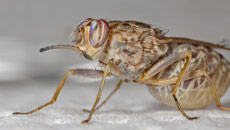
    With genome decoding of tsetse fly that causes the potentially fatal sleeping sickness disease, scientists have discovered new clues to the diet, vision and reproductive strategies of the insect.

    Fly's genome study offers hope for sleeping sickness

    Technology to catch dozing drivers on the go

    Technology to catch dozing drivers on the go
    Long rides at night can now become a lot more pleasant and safe if you listen to researchers who have developed an inexpensive and easier way to find out when the person behind the wheel is about to nod off.

    Technology to catch dozing drivers on the go

    Astronauts may face attention deficit risks

    Astronauts may face attention deficit risks
    Astronauts who are radiation-sensitive need to take extra care to protect their brains as they may face risks of attention deficit and slower reaction times, a study suggests.

    Astronauts may face attention deficit risks

    Befriend a cyber buddy to stay motivated

    Befriend a cyber buddy to stay motivated
    Although a human partner is a better motivator during exercise, a software-generated cyber partner can also be effective in making you work a little extra, research reveals.

    Befriend a cyber buddy to stay motivated