Thursday, December 25, 2025
ADVT 
Health

Copper could help prevent Ebola spread

Darpan News Desk IANS, 04 Nov, 2014 10:12 AM
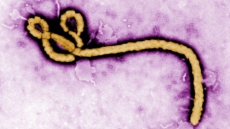
    Replacing frequently-touched surfaces, such as door handles, taps and light switches, with solid copper or copper alloy equivalents could be an effective strategy to prevent the spread of the deadly Ebola virus, says a study.
     
    The research from the University of Southampton in Britain found that anti-microbial copper - engineering materials with intrinsic hygiene benefits - could be a valuable addition to the existing measures adopted to contain the spread of the virus.
     
    "Based on our research on viruses of similar genetic structure, we expect copper surfaces to inactivate Ebola, and to help control the spread of this virus if employed for publicly-used touch surfaces," said Bill Keevil, professor at the University of Southampton.
     
    Peer-reviewed and published data from laboratory studies conducted by Keevil demonstrates copper's ability to rapidly and completely inactivate norovirus.
     
    The US Centers for Disease Control and Prevention (CDC) note the Ebola virus is transmitted through direct contact with the bodily fluids of an infected person, or through exposure to contaminated objects.
     
    Anti-microbial copper surfaces have been described as a 'no touch' solution, meaning that no special measures or human intervention are required for it to continuously kill pathogens, in between regular cleans.
     
    With this in mind, the use of anti-microbial copper surfaces could offer an additional method of controlling the current spread of Ebola.

    MORE Health ARTICLES

    Canada pulling 3 member lab team back from Sierra Leone over Ebola fears

    Canada pulling 3 member lab team back from Sierra Leone over Ebola fears
    Canada is bringing three scientists home from Kailahun, Sierra Leone, a post which the World Health Organization has temporarily closed to investigate the infection of an international medical responder working there.

    Canada pulling 3 member lab team back from Sierra Leone over Ebola fears

    More kids at risk of developing diabetes from womb, says study

    More kids at risk of developing diabetes from womb, says study
    New research shows that children exposed to gestational diabetes in the wombs are nearly six times more likely to develop diabetes or prediabetes than children...

    More kids at risk of developing diabetes from womb, says study

    Low-dose aspirin reduces blood clot risk

    Low-dose aspirin reduces blood clot risk
    Low-dose aspirin can help prevent new blood clots among people who are at risk and have already suffered a blood clot, says a promising study....

    Low-dose aspirin reduces blood clot risk

    Knee surgery not needed for mild osteoarthritis

    Knee surgery not needed for mild osteoarthritis
    Middle-aged and older patients with mild osteoarthritis of the knee may not benefit from the procedure of arthroscopic knee surgery, says new research....

    Knee surgery not needed for mild osteoarthritis

    Eye changes can predict dementia

    Eye changes can predict dementia
    A loss of cells in the retina is one of the earliest signs of a form of dementia in people with a genetic risk for the brain disorder - even before any changes appear....

    Eye changes can predict dementia

    Canadian doctors have begun using stem cell transplants to treat 'Stiff Person Syndrome'

    Canadian doctors have begun using stem cell transplants to treat 'Stiff Person Syndrome'

    TORONTO - Canadian doctors have begun using stem cell transplants to treat "stiff person syn...

    Canadian doctors have begun using stem cell transplants to treat 'Stiff Person Syndrome'