Friday, March 27, 2026
ADVT 
Health

Decoded: How Alzheimer's spreads

Darpan News Desk IANS, 14 Oct, 2014 10:43 AM
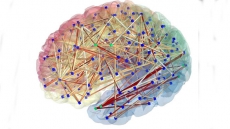
    In a major breakthrough, a team of US researchers has confirmed that deposits of a protein called beta amyloid in the brain trigger Alzheimer's disease.
     
    Using 3D lab culture, the team at the Massachusetts General Hospital also found an enzyme that plays a key role in the progression of the disease, Washington Post reported.
     
    A 3D cell culture is an artificially-created environment in which biological cells are permitted to grow or interact with its surroundings in all three dimensions. 
     
    Scientists already know that two protein variants - amyloid beta that forms insoluble plaques and tau that creates neuro-fibrillary tangles - are distinguishing features of Alzheimer's disease.
     
    "The question was, does the amyloid really cause the tangles because the tangles are what kill the nerve cells? And this is the first proof of concept in a human nerve cell system that it does," lead study author Rudolph Tanzi, director of the genetics and ageing research unit at the Massachusetts General Hospital, was quoted as saying.
     
    To reach the conclusion, researchers used a 3D culture with neural stem cells that carried the variants in two genes, the amyloid beta precursor and presenilin 1, which is found in early onset Alzheimer's.
     
    The 3D models in the lab created both plaques and tangles.
     
    The discovery may revolutionise drug discovery for other neuro-degenerative disorders, researchers noted in a paper that appeared in the journal Nature.

    MORE Health ARTICLES

    Ocean microbes a global source of key vitamin B12

    Ocean microbes a global source of key vitamin B12
    A group of micro-organisms may be responsible for much of the world's vitamin B12 production in the oceans, with implications for the global...

    Ocean microbes a global source of key vitamin B12

    Low sugar intake reduces tooth decay

    Low sugar intake reduces tooth decay
    Daily intake of sugar should make up no more than three percent of total energy intake and its reduction in consumption could lead to decrease...

    Low sugar intake reduces tooth decay

    A glass of milk daily good for your heart

    A glass of milk daily good for your heart
    Do you find drinking milk disgusting? Listen to your heart and change the habit. New research has found that drinking milk and consuming...

    A glass of milk daily good for your heart

    Bald men in 40s at higher risk of prostate cancer

    Bald men in 40s at higher risk of prostate cancer
    Compared to men with no baldness in their 40s, men with a specific pattern of baldness at age 45 have a 40 percent increased risk of...

    Bald men in 40s at higher risk of prostate cancer

    Eat chikoo to fight cancer

    Eat chikoo to fight cancer
    The sweet and succulent chikoo or Sapota fruit, a popular ingredient for desserts, could well be the answer to halt cancer from spreading, according to a study by Indian scientists....

    Eat chikoo to fight cancer

    Tweaking brain circuits may cure autism

    Tweaking brain circuits may cure autism
    In a ray of hope for people suffering from autism, researchers have discovered neuron populations in a region of the mouse brain that controls...

    Tweaking brain circuits may cure autism