Saturday, December 20, 2025
ADVT 
Health

Decoded: How Alzheimer's spreads

Darpan News Desk IANS, 14 Oct, 2014 10:43 AM
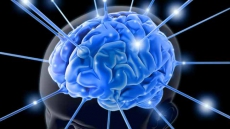
    In a major breakthrough, a team of US researchers has confirmed that deposits of a protein called beta amyloid in the brain trigger Alzheimer's disease.
     
    Using 3D lab culture, the team at the Massachusetts General Hospital also found an enzyme that plays a key role in the progression of the disease, Washington Post reported.
     
    A 3D cell culture is an artificially-created environment in which biological cells are permitted to grow or interact with its surroundings in all three dimensions. 
     
    Scientists already know that two protein variants - amyloid beta that forms insoluble plaques and tau that creates neuro-fibrillary tangles - are distinguishing features of Alzheimer's disease.
     
    "The question was, does the amyloid really cause the tangles because the tangles are what kill the nerve cells? And this is the first proof of concept in a human nerve cell system that it does," lead study author Rudolph Tanzi, director of the genetics and ageing research unit at the Massachusetts General Hospital, was quoted as saying.
     
    To reach the conclusion, researchers used a 3D culture with neural stem cells that carried the variants in two genes, the amyloid beta precursor and presenilin 1, which is found in early onset Alzheimer's.
     
    The 3D models in the lab created both plaques and tangles.
     
    The discovery may revolutionise drug discovery for other neuro-degenerative disorders, researchers noted in a paper that appeared in the journal Nature.

    MORE Health ARTICLES

    Simple blood tests can save hepatitis patients

    Simple blood tests can save hepatitis patients
    Blood tests can save more than 80 percent hepatitis C patients and over 60 percent hepatitis B patients when combined with proper prevention and treatment, say experts.

    Simple blood tests can save hepatitis patients

    Strong parental bonds make kids smart

    Strong parental bonds make kids smart
    Sharing a strong bond with your kids is vital for them to socialise, make friends and enjoy positive, close relationships with others, a study shows.

    Strong parental bonds make kids smart

    Natural beauty favoured by most but how natural is it?

    Natural beauty favoured by most but how natural is it?
    Almost three quarters of men say they find women more attractive when they wear less makeup; however what they think is the natural look is more likely to take hours of effort and plenty of special makeup tricks, says a research.

    Natural beauty favoured by most but how natural is it?

    Menthol cigarettes lure teenagers to smoke more: Study

    Menthol cigarettes lure teenagers to smoke more: Study
    Flavoured cigarettes appeal the youth and teenagers, who use menthol cigarettes, more per day than their peers who smoke non-menthols, says a study.

    Menthol cigarettes lure teenagers to smoke more: Study

    Tap brain's self-repairing mechanism to fight diseases

    Tap brain's self-repairing mechanism to fight diseases
    Forget drugs and neurogenesis, the self-repairing mechanism of the adult brain can help preserve brain function and can be targeted as a potential therapeutic intervention in neurodegenerative diseases such as Alzheimer's, Prion or Parkinson's, says a study.

    Tap brain's self-repairing mechanism to fight diseases

    Know the science of cake cutting

    Know the science of cake cutting
    You may cut a cake in triangular shapes every year your birthday comes calling but that may not be the best way to enjoy the yummy dessert, especially if it is stored for some friends who missed the date.

    Know the science of cake cutting