Saturday, April 4, 2026
ADVT 
Health

Decoded - That Pungent Armpit Smell!

Darpan News Desk IANS, 31 Mar, 2015 12:24 PM
    Identifying specific causal factors for that off-putting underarm smell, a recent research offers a new approach to inhibiting the formation of that pungent body odour which often keeps even your loved ones away.
     
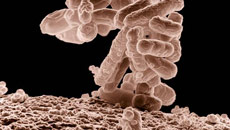
    For many, body odour is an unfortunate side-effect of their daily lives. The smell is caused by bacteria on the skin breaking down naturally secreted molecules contained within sweat.
     
    The researchers studied the underarm microbiome and identified a unique set of enzymes in the bacterium Staphylococcus hominis that is effective at breaking down sweat molecules into compounds known as thioalcohols, an important component of the characteristic body odour smell.
     
    In the work, presented at the Society for General Microbiology's Annual Conference in Birmingham, the research group assessed the ability of over 150 bacterial isolates from underarm skin samples to produce malodourants.
     
    "This work has significantly advanced our understanding of the specific biochemical processes involved in body odour production," said lead researcher Dan Bawdon from University of York in Britain.
     
    The researchers also identified the genes encoding the proteins responsible for producing the thioalchohols, which are pungent in tiny amounts -- as little as one part per trillion.
     
    "It was surprising that this particular body odour pathway is governed by only a small number of the many bacterial species residing in the underarm. We have opened up the possibility of inhibiting body odour formation using compounds designed to target the specific proteins controlling the release of malodourants," Bawdon added.
     
    Traditional deodorants and anti-perspirants act by non-selectively killing underarm bacteria or by blocking our sweat glands, respectively.
     
    This new study can be used to produce compounds that specifically target thioalcohol production, leaving the underarm microbiota intact, the researchers said.
    MORE Health ARTICLES

    Scientists rewrite code of life with 'alien' DNA

    Scientists rewrite code of life with 'alien' DNA
    In a major breakthrough that could re-write the history of life on earth, scientists have successfully added an alien pair of DNA "letters" (or bases) to create the first "semi-synthetic" bacterium.

    Scientists rewrite code of life with 'alien' DNA

    Now, a DNA tool to spot cancer

    Now, a DNA tool to spot cancer
    Detecting cancer could soon become a lot easier as scientists have used DNA to develop a tool that detects and reacts to chemical changes caused by cancer cells.

    Now, a DNA tool to spot cancer

    What you were waiting for! A device that detects pee in pool

    What you were waiting for! A device that detects pee in pool
    Those who have a habit of peeing in a swimming pool, beware. Here comes a device glows green the moment it detects traces of human waste in water.

    What you were waiting for! A device that detects pee in pool

    Do humans have spiders' genes?

    Do humans have spiders' genes?
    Not only the spiderman, even you may share certain genomic similarities with spiders, a study that for the first time sequenced the genome of a spider has revealed.

    Do humans have spiders' genes?

    Anger a better motivator for volunteers than sympathy?

    Anger a better motivator for volunteers than sympathy?
    Angry people do not always raise a ruckus; they may also bring about positive changes to society with a new study showing that anger may be more effective at motivating people to volunteer than other motives.

    Anger a better motivator for volunteers than sympathy?

    Impulsive people at greater risk of food addiction

    Impulsive people at greater risk of food addiction
    Impulsive people are at greater risks of food and drug addition as impulsivity is a result of cellular activities in the part of the brain involved with reward and not a result of dysfunctional eating behaviour, a study indicated.

    Impulsive people at greater risk of food addiction