Thursday, December 18, 2025
ADVT 
Health

Decoded - That Pungent Armpit Smell!

Darpan News Desk IANS, 31 Mar, 2015 12:24 PM
    Identifying specific causal factors for that off-putting underarm smell, a recent research offers a new approach to inhibiting the formation of that pungent body odour which often keeps even your loved ones away.
     
    For many, body odour is an unfortunate side-effect of their daily lives. The smell is caused by bacteria on the skin breaking down naturally secreted molecules contained within sweat.
     
    The researchers studied the underarm microbiome and identified a unique set of enzymes in the bacterium Staphylococcus hominis that is effective at breaking down sweat molecules into compounds known as thioalcohols, an important component of the characteristic body odour smell.
     
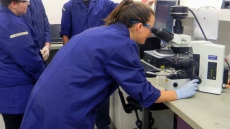
    In the work, presented at the Society for General Microbiology's Annual Conference in Birmingham, the research group assessed the ability of over 150 bacterial isolates from underarm skin samples to produce malodourants.
     
    "This work has significantly advanced our understanding of the specific biochemical processes involved in body odour production," said lead researcher Dan Bawdon from University of York in Britain.
     
    The researchers also identified the genes encoding the proteins responsible for producing the thioalchohols, which are pungent in tiny amounts -- as little as one part per trillion.
     
    "It was surprising that this particular body odour pathway is governed by only a small number of the many bacterial species residing in the underarm. We have opened up the possibility of inhibiting body odour formation using compounds designed to target the specific proteins controlling the release of malodourants," Bawdon added.
     
    Traditional deodorants and anti-perspirants act by non-selectively killing underarm bacteria or by blocking our sweat glands, respectively.
     
    This new study can be used to produce compounds that specifically target thioalcohol production, leaving the underarm microbiota intact, the researchers said.


    MORE Health ARTICLES

    US Institute To Study Sexual Habits Of Obese Girls

    US Institute To Study Sexual Habits Of Obese Girls
    The US National Institute for Health (NIH) has collaborated with researchers from the University of Pittsburgh' Magee-Women's Research Institute to study the sexual habits of obese girls.

    US Institute To Study Sexual Habits Of Obese Girls

    Toy-related Injuries On The Rise In US

    Toy-related Injuries On The Rise In US
    The study highlights that while playing with toys helps children to develop, learn, and explore, parents should also note that many toys pose an injury risk to children.

    Toy-related Injuries On The Rise In US

    Too Many Us Infants Still Sleep With Blankets Or Other Unsafe Bedding

    Too Many Us Infants Still Sleep With Blankets Or Other Unsafe Bedding
    CHICAGO — Too many U.S. infants sleep with blankets, pillows or other unsafe bedding that may lead to suffocation or sudden infant death syndrome, despite guidelines recommending against the practice. That's according to researchers who say 17 years of national data show parents need to be better informed.

    Too Many Us Infants Still Sleep With Blankets Or Other Unsafe Bedding

    Personalised vaccines for cancer a step closer

    Personalised vaccines for cancer a step closer
    Researchers have developed a strategy to create personalised vaccines that spur the immune system to attack harmful tumours....

    Personalised vaccines for cancer a step closer

    'Off switch' for pain discovered

    'Off switch' for pain discovered
    Researchers have uncovered a new way to block neuropathic pain including pain caused by chemotherapeutic agents and bone cancer....

    'Off switch' for pain discovered

    Nervous system plays bigger role in infections

    Nervous system plays bigger role in infections
    The nervous system may play a bigger role in infections and auto-immune diseases than previously known, says a study....

    Nervous system plays bigger role in infections