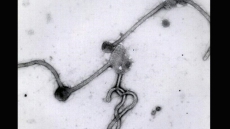
Nearly every girl and woman on Earth carries two X chromosomes in each of her cells -- but one of them does (mostly) nothing. Do you know why?
That is because it has been silenced, keeping most of its DNA locked up and unread like a book in a cage, scientists led by an Indian-American researcher from the University of Michigan Medical School have revealed.
A wide range of relatively rare diseases - as well as relatively common conditions such as autism, haemophilia and muscular dystrophy - are linked to problems with genes found on the X chromosome.
The findings could help lead to new ways of fighting diseases linked to X chromosomes in girls and women -- the kind that occur when the X chromosome that does get read has misprints and defects.
The team found that a known molecule called “Xist RNA” is insufficient to silence the X chromosome.
"Xist is widely believed to be both necessary and sufficient for X silencing," said team leader Sundeep Kalantry.
"We, for the first time, show that it is not sufficient and there have to be other factors - on the X-chromosome itself that activate 'Xist' and then cooperate with 'Xist RNA' to silence the X-chromosome,” he elaborated.
In the future, it may be possible to change the level of these other factors in cells and turn on the healthy, silenced copy of a gene that lies on the inactive X-chromosome, Kalantry added.
Although most genes on the inactive X chromosome are fully silenced, a handful of the genes on the inactive X are, in fact, active.
It is this set of X-inactivation “escapees” that the research team was focused on.
Since the “escapee” genes are expressed from both the active and the inactive X-chromosomes in females, they produce more gene product in female cells than in male cells which only have a single X.
According to Kalantry, it is this higher “dose” in females that triggers X-inactivation selectively in females; the lower dose in males is insufficient.
"That means that if researchers can determine exactly which factors cause X-inactivation to occur, they could find ways to affect the activity of genes on the X chromosomes - specifically, genes involved in certain diseases.” the authors noted.
Many of them have an impact on an individual's thinking and memory capacity, and other aspects of cognition and intelligence.
"In females, we could envision 'reawakening' a healthy copy of an X-linked gene on the inactive X chromosome, by modulating the dose of these so-called escapee genes and ameliorating the effects of the unhealthy copy," Kalantry explained.
Unfortunately, this approach probably won't help males with X-linked diseases, because they only have a single X chromosome in each cell and inactivating it would be harmful.
The new paper appeared in the journal Proceedings of the National Academy of Sciences.