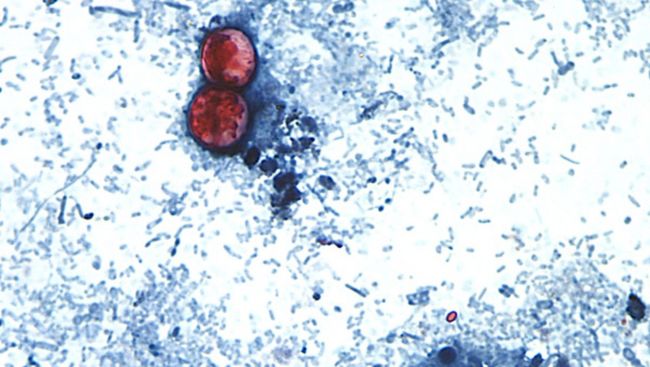
The outbreak of a parasite that causes weeks of watery diarrhea and has infected more than 1,200 people in Michigan has not spread to Canada based on the latest information from the country's health agency.
The midwestern state announced an outbreak of cyclospora last week, saying more than 170 people had been infected. Since then, cases have climbed to 1,251 as of Thursday, a surge of nearly 260 cases from a day earlier.
Public health officials in Michigan said the source of the outbreak is still unknown and that the number of people getting sick from the parasite is unusual compared to the 50 cases typically reported per year.
Dr. Susy Hota, division head of infectious diseases at Toronto's University Health Network, said the reason cases have not spread to Canada at this point in time could be because the contaminated food in Michigan is sold or prepared locally.
Hota said part of the challenge of investigating the source of a cyclospora outbreak is symptoms can take a couple weeks to appear, and by then, people often don’t remember what they ate.
WHAT IS CYCLOSPORA?
Cyclospora most commonly causes watery diarrhea for six to seven weeks, in addition to bloating and gas, nausea, tiredness, stomach cramps, loss of appetite, weight loss and a mild fever.
The disease is not spread from person-to-person because the organism needs time outside of the body to change in form after it is released in feces.
The parasite can then contaminate food when the feces of an infected person gets into the water supply used for crops or in food processing or packaging.
Mark Johnson, a spokesperson for the Public Health Agency of Canada, said Thursday that no cyclospora outbreaks are currently being investigated in Canada.
Johnson said cyclospora is not in the country's drinking water.
It is also not commonly found on food in Canada, but it can be imported from other countries, such as Peru, Cuba, India, Nepal, Mexico, Guatemala, Southeast Asia and the Dominican Republic.
HOW TO STAY SAFE
There is usually an increase of cases in summer and spring when fresh fruit and vegetables are imported into Canada. Foods that have been linked to the parasite include basil, cilantro, raspberries, blackberries, mesclun lettuce, snow and snap peas, and pre-packaged salad mix.
Always wash fruits and vegetables, Hota says, especially pre-packaged salads where the produce has been sitting for a long time.
However, she added that washing doesn't 100 per cent prevent food contamination because it's always possible to miss a spot.
Another option is sticking to fresh produce grown in Canada, where water and sewage treatment mitigates agricultural contamination, Hota said.
"Look at where your food is coming from and consider that carefully. If you're able to buy locally, that's another assurance that you can have safer food," she said.
The illness, called cyclosporiasis, is diagnosed with a stool sample and treated with a prescription medication. Symptoms usually improve within two to three days after starting the medication, but it can take several weeks for intestinal problems to disappear.
Picture Courtesy: CDC via AP